13 August 2018

Australia must face the new Iran reality

From the Australia/Israel & Jewish Affairs Council (AIJAC), 13 Aug 2018, by Dr. Colin Rubenstein, Executive Director:

Following its May withdrawal from the Joint Comprehensive Plan of Action (JCPOA )nuclear deal, the US Trump Administration is reimposing a series of sanctions on Iran, targeting Iranian trade in aircraft, automobiles, pistachios, and gold. In November, an additional round of sanctions will target exports.

Meanwhile the Trump Administration and the Iranian regime are certainly in a war of words at the moment, with  President Donald Trump and Iranian President Rouhani exchanging threatening tweets, Trump offering a summit and being rebuffed by Iran, US Secretary of State Mike Pompeo flagging increased US support for Iranian protestors and dissidents, and Iran threatening to close the strategically vital Strait of Hormuz.

This reality means that Australia should urgently clarify its stance towards Iran.

We know that Foreign Minister Julie Bishop and Mike Pompeo discussed Iran at the July AUSMIN summit.

While Bishop, commendably and appropriately, has been recently criticising Iran’s regional military aggression and ongoing missile development, Australian diplomats are actively reaching out to Teheran’s commercial class and signalling a “wait and see” approach to the discredited JCPOA.

Australia needs a clear and consistent position– which should be based on Australia’s national interest in robustly addressing the threat posed by a belligerent, expansionist and irresponsible Iran.

As smuggled intelligence documents revealed by Israel have shown, Iran’s nuclear program was further advanced than anyone thought. Further, since the signing of the nuclear deal, Iran has continued to pursue its strategy of non-compliance and incomplete disclosure of its nuclear capabilities and ambitions.

This means that, contrary to claims often heard, it is not true that Iran has complied with the terms of the JCPOA nuclear deal reached between Iran, the US, UK, France, Russia, China and Germany. That deal required Iran to cooperate with the International Atomic Energy Agency (IAEA) to account for and document its past nuclear efforts. The archives Israel captured prove conclusively that not only did Iran fail to do so, it actively sought to conceal its nuclear expertise from IAEA scrutiny. These are clear violations of the JCPOA.

Meanwhile, the JCPOA agreement not only failed to do more than temporarily postpone a nuclear Iran but has effectively empowered Iran to step up its other menacing activities.

Much to the disgust of long-suffering Iranians, funds released under that deal have been  used primarily to save the despotic Syrian leader Bashar al-Assad and to aid the rebels in the murderous war in Yemen, to fund and direct terrorists, and to destablise most of Iran’s other neighbours -  all developments definitely not in Australia’s national interest.

Furthermore Iran’s ballistic missile program is continuing - in contravention of UN resolutions.
Meanwhile, even before US sanctions were restored, the economic pressure on the Iranian regime has been growing rapidly. Iran’s Rial is in free fall, inflation is estimated at 220%, multinational investors are fleeing in droves, and street protests against the dire economic situation have become frequent and nationally widespread.

...Renewed pressure on Iran is the key to both changing these unacceptable arrangements on the nuclear issue, and to making new agreements to address the Iranian regime’s other rogue activities.
Yet even though Australia has only very limited economic ties to Iran, Australian diplomats have recently been actively encouraging further links, even as European and Asia companies have been pulling out en masse.


In July, Australia’s Trade Commissioner in Iran, Mounir Sankary, met with officials from Iran’s Sharif University, and the Australian Embassy in Teheran announcing the meeting, noted “Australian companies are keen on doing business with Iran.”

[At another meeting with Sharif University on 7 August 2018, Sharif reports: "Mr. Sankary expressed the importance of having strong relations with Iran and especially Sharif University of Technology and emphasized that his organization, Australian Trade and Investment Commission (Austrade) wholeheartedly supports joint efforts between Sharif and Australian universities."] 

Thus the Australian Government’s more critical stance of late must be backed up by our diplomats. Iran poses a serious threat for our allies and for international and regional order and Australia has a useful role to play in assisting US efforts to deter, counter and contain that threat. 

03 August 2018

Liberal friends rally for Israel

From the Australian Jewish News, 28 July 2018:


The launch of Victorian Liberal Friends of Israel. 
Photo: Greg Every

MORE than 300 supporters gathered at Central Shule in Caulfield, as Victorian Liberals, including federal Environment and Energy Minister Josh Frydenberg, relaunched Victorian Liberal Friends of Israel.

In a muscular show of support, 16 state Liberal MPs filled multiple rows of the synagogue’s pews last Sunday night to hear calls for solidarity with Israel, rebooting a group initially founded by former Caulfield MP Helen Shardey.

Successor David Southwick, with Senator James Paterson and Goldstein MP Tim Wilson, are the patrons of the new group.

Referencing the anti-Israel stance of the Greens, Paterson said, “As you all know, Michael Danby is retiring [as MP for Melbourne Ports] and sadly there is a very real risk that the Greens … could end up winning the seat and representing the second-largest Jewish seat in Australia. We must not allow that to happen.”

Frydenberg said, “I stand before you as a proud Jewish member of the Parliament, but it’s not my Jewishness that defines my support of Israel … it’s about what Israel stands for, it’s about its values, it’s about its traditions, it’s about its culture, it’s about its history.”

“But nothing that Israel stands for we can take for granted,” he said, listing BDS, Iran’s “Shi’ite axis”, and the politics of “the divisive and despicable [former senator] Bob Carr” as challenges.

Referring to the Liberals as “a Zionist political party” several times, state Liberal leader Matthew Guy lauded the friends organisation as “a group for all faiths who call Israel home”, repeating his pledge that, if elected, he would locate a state trade office in West Jerusalem, “the undisputed capital of Israel”.

Former Australian ambassador to Israel Dave Sharma lamented “too much heat and not enough light” when Australians discuss Israel, “the only country in the Middle East that truly shares our values”.

Southwick emphasised the importance of a Victorian friends group. “When Israel is attacked, it comes home here in our state”, on campus and in attacks on shules.

Zionism Victoria president Sharene Hambur said, “So often media reports fail even to attempt to provide a balanced view, [so] groups such as the one being relaunched tonight play an incredibly valuable role.”

Christian Zionist Jill Curry noted some 8000 Christians petitioned federal Parliament last year to move Australia’s embassy to Jerusalem and more than 20 Australian Christian groups visited for the Beersheba centenary.

“I say to Israel and the Jewish community, there are many of us, you are not alone,” she said.

02 August 2018

Myths and Facts about Israel’s new Nation-State law


From an article by Colin Rubenstein (AIJAC)* published in the Jakarta Post, August 1:

Israel’s new Jewish Nation-State law, passed in the Knesset on July 19, has been greeted with widespread condemnation abroad. Yet upon closer examination much of the criticism appears to be based upon misinterpretations and assumptions that go beyond the actual wording of the law.

The law, it must be stressed outright, is purely declarative in nature and carries with it no practical impact on Israeli life. Rather, it is an overwhelmingly symbolic reaction to those who object to the continued existence of Israel as a Jewish and democratic state.

Principally among them is the Palestinian leadership, who have vehemently rejected Israel’s reasonable demand to be accepted and recognised as a Jewish homeland in any future peace agreement...

Israeli Prime Minister Binyamin Netanyahu made this clear in his response to the law’s passage. “Israel is the nation state of the Jewish people, which respects the individual rights of all its citizens,” Netanyahu said. “In recent years there have been some who have attempted to put this in doubt, to undercut the core of our being. Today we made it law: This is our nation, language and flag.”
San Remo Resolution – 25 April 1920
[emphasis added] 
It was agreed –
(a) To accept the terms of the Mandates Article as given below with reference to Palestine...
(b) that the terms of the Mandates Article should be as follows:
...The High Contracting Parties agree to entrust, by application of the provisions of Article 22, the administration of Palestine... to a Mandatory.... The Mandatory will be responsible for putting into effect the declaration originally made on the 8th [2nd] November, 1917, by the British Government, and adopted by the other Allied Powers, in favour of the establishment in Palestine of a national home for the Jewish people, it being clearly understood that nothing shall be done which may prejudice the civil and religious rights of existing non-Jewish communities in Palestine, or the rights and political status enjoyed by Jews in any other country...
The law simply enshrines among Israel’s Basic Laws the foundational sentiment embodied within [the UK Balfour Declaration, the international San Remo Resolution, and] Israel’s Declaration of Independence, namely, that Israel is the homeland of the Jewish people, where the Jewish people exercise their right to national self-determination. It then goes on to provide elevated constitutional status to existing laws regarding Israel’s flag, national holidays, use of the Jewish calendar, and the Hebrew language.

Similar constitutional provisions emphasising national self-determination and cultural expression can be found in numerous countries ...

...Allegations that the law is racist or harms the status of minorities in Israel are ...baseless. 

... the law also does not... “downgrade” the status of Arabic in the country – it explicitly states that the clause identifying Hebrew as the official language of Israel “does not change the status given to the Arabic language before the Basic Law was created” and also insists Arabic services must be available for all government business.

A passage in the law that commends “Jewish settlement as a national value” also created controversy, primarily because the term “settlement” is ...associated with Jewish towns in the disputed West Bank. Yet the law’s phrasing in Hebrew simply mimics language of the pre-state Zionist movement regarding the national goal of rebuilding and restoring Jewish life in the land of Israel and it does not necessarily have any other connotations.

To be sure, radically anti-Zionist Arab lawmakers from the far-left Joint List party were always going to vehemently oppose any law of this kind – they object to any characterisation of Israel as a Jewish homeland, even though Israel has been explicitly such a homeland since 1948.

Even so, the offence voiced over the matter by Druze and Arab leaders does suggest mistakes in the drafting, debate, and execution of the legislation, something even some top government ministers have acknowledged and vowed to address.

These missteps are lamentable, because the controversy risks setting back hard-fought and sustained achievements by successive Israeli governments in recent years towards empowering and integrating Israel’s minorities and addressing both the discrimination and social gaps which affect them. 

Thabet Abu Rass, co-director of the Israeli coexistence NGO Abraham Fund, told the Jerusalem Post earlier this year that the Israeli Arab community is “more integrated” and has “more mobility” in Israeli society than ever, with a record number studying in Israeli universities, producing more Arab doctors, nurses and pharmacists than ever before. Abu Rass noted, for example, that four out of 11 players on Israel’s national soccer team are Arab, while the Netanyahu Government had delivered on a 2015 promise to invest 15 billion shekels ($4.1b) into Israeli Arab communities – an infusion “unprecedented in scope”.

Veteran lawmaker Benny Begin of the ruling Likud party, son of the late Israeli PM Menachem Begin, who notably abstained on the vote over the law, told the Knesset it would have been both wiser and more constitutionally sound if the Basic Law had included a specific clause asserting that its provisions do not in any way diminish the legal, social, political or civil rights and equality of Israel’s non-Jewish minority. Opposition politicians, such as new parliament opposition leader Tzipi Livni, have said the same thing, with Livni suggesting she and her party would likely have supported the law if such a clause had been included in it.

Such a clause would have been advisable even though the new law does not supersede earlier Israeli basic laws which already guarantee these equal rights.

... The ongoing national project that is Israel, Jewish and democratic, which existed before the passage of the law, continues unchanged...

*Dr. Colin Rubenstein is Executive Director of the Australia/Israel & Jewish Affairs Council (AIJAC) in Melbourne, Australia. Previously, he taught Middle East Politics at Monash University for many years. 

23 July 2018

Survey of Candidates in the Perth By-election

The Jewish Community Council of Western Australia Inc has now completed its survey of the opinions of candidates for the forthcoming by-election for the Perth Electorate, in relation to issues of interest to the community.

The following is a list of the candidates in alphabetical order. Ten of them responded to our questionnaire. Those in italics did not respond.


ARIELLI Nicole Animal Justice Party
BRITZA Ian Independent
COLLINS Paul Independent
DU PREEZ Wesley Liberal Democrats
GORMAN Patrick Australian Labor Party
GRAYDEN Jim Independent
HAMMOND A Science Party
HARFOUCHE Gabriel Australian People's Party
JOUBERT Ellen Australian Christians
MASON Barry Citizens Electoral Council*
MATHESON Julie Western Australia Party
MULLINGS Ben The Australian Mental Health Party
PERKS Caroline The Greens (WA)**
ROBINSON Tony ALA
SCOTT Colin Sustainable Australia


The responses received are available as follows:


Further information for voters:

*Citizens Electoral Council
Voters should be aware that the The Citizens Electoral Council of Australia is a minor political party in Australia affiliated with the international LaRouche Movement, led by American political extremist Lyndon LaRouche, who three times ran for President of the USA, and was sentenced in 1989 to 15 years in prison for scheming to defraud the Internal Revenue Service and deliberately defaulting on more than $30 million in loans from his supporters. In 2011, the Party's leader in Australia, Craig Isherwood published an article in its "New Citizen" entitled : “Defeat the British Crown’s Green Fascist Dictatorship” Under that banner headline, the Citizens Electoral Council presented a purported "indictment of the British Royal Family’s half-century long creation and personal direction of the world’s present “green” movement, as their chosen vehicle for global genocide."

**Greens Party
The Greens national policy on “Israel/Palestine” is anchored in a core resolution dated March 2010, which includes 
  • their demand for the Australian government “to halt military cooperation and military trade with Israel”
  • to “recognise the ongoing injustice that has been done to the Palestinian people and aim to rectify that injustice in a way that will allow both Palestinians and Israelis to live in peace”
  • calls for “the establishment of an international commission under the auspices of the UN to effect a settlement of the conflict” and only then “peace negotiations facilitated by the commission leading to a schedule for the implementation of all the goals”
  • calls for the deployment of “international” forces to protect Palestinians.
The Greens have never issued a condemnation of an act of Palestinian violence or terrorism but Greens Foreign Policy spokesman Sen. Scott Ludlam has made many statements including condemnations of Israel. Among Ludlam’s statements have been baseless and inflammatory accusations copying Palestinian propaganda, such as his false claim in October 2015 that “Israeli military forces have repeatedly stormed the holy site of the Al-Aqsa mosque.”

All Greens members of parliament also signed the strongly anti-Israel 2014 Canberra Declaration on Gaza.

In July 2014, amidst fighting between Israel and Hamas, the Greens National Council passed a resolution accusing Israel of waging war against civilians by putting “the might of its military force against the Palestinian people… this has not been proportionate to the Hamas rocket attacks.”

At its national conference in November 2015, the Greens passed a resolution formally recognising the State of Palestine “as a contribution to securing a negotiated two-state solution.”

Greens leader, Sen. Richard Di Natale, is on record as opposing Israel’s demand to be recognised as a Jewish state or homeland under the widely used formula “two states for two peoples”. As the left-wing website New Matilda reported: “Di Natale’s office [said that] the Senator supported a peaceful two-state solution. ‘The establishment of a “Jewish state” (as opposed to an “Israeli state”) is not conducive to this outcome, and Senator Di Natale did not intend for his comments to be construed as such, and this is not Australian Greens policy.'” In this, the Greens closely align with the position of the Palestinian Authority, which staunchly rejects recognising Israel as a Jewish homeland in any peace agreement.

In August 2014, during Israel’s Operation Protective Edge against Hamas, Greens Acting Leader Adam Bandt called on Australia to pressure the US to cut off arms supplies to Israel. “Australia cannot stand idly by while its ally arms one side of the conflict in Gaza,” said Mr Bandt in a press release. Bandt suggested Australia should suspend its own military cooperation with the United States as a form of coercion. “Australia could, for example, suspend the basing of US troops in Darwin until the United States pulls back from restocking the Israeli government and taking sides in the conflict,” Bandt said.

In March 2016, Sen. Ludlum attempted to push a motion to halt military cooperation and military trade with Israel, in a vote that coincided with the visit of former Israeli Defence Forces Chief of Staff Benny Gantz to Australia. Referring to Gantz’s role in Gaza conflicts, the news item on the attempted motion posted on the Greens website was titled “Don’t mention the alleged war crimes”.

A further issue in the Greens platform likely to concern many in Australia is its policy of removing clauses granting limited exemptions to religious organisations from anti-discrimination laws. This would likely impact significantly on Jewish schools and other communal institutions and concern has been expressed about this policy by Jewish community leaders.

Di Natale also controversially called for Australia to end its alliance with the US because of “the horrific consequences of US foreign policy.”


Our ABC: Dancing to terror’s tune

From The Spectator, 21 July 2018, by David Adler:

Image result for aviv levy funeral
Staff Sergeant Aviv Levi, a platoon sergeant in the Givati Brigade, was shot and killed by a Hamas sniper on 21 July 2018.

If when you woke on the morning of Sunday 15 July, you made the error of watching the ABC television news bulletin, you would have seen that the lead item began: 
‘The Israeli military has launched a wave of airstrikes against dozens of militant targets in the Gaza Strip.’ The bulletin included video clips of bombs exploding buildings, narrated as Israel’s targets in Gaza, and went on to describe ‘the operation is one of Israel’s broadest since the 2014 war.’ 
Anyone not informed about events in the region could be forgiven for concluding Israel had just initiated a war and had done so with no clear provocation.

Omitted completely by the ABC was the critical contextual information that in the previous 24 hours Israeli citizens in the south of the country had been targets of over 170 rockets and mortars which in turn followed weeks of fire bombs delivered by kites, balloons and inflated condoms. These attacks were orchestrated against Israel by the proscribed terrorist organisations Hamas and Islamic Jihad. Hardly a trivial oversight.

The ABC did mention that three Israelis had been injured by a (singular) rocket in Sderot but failed to mention the sequence or anything of the scale and timeframe of the attacks against Israel. Or even who was to blame for their injuries.

Indeed, the ABC reporting was so biased and one-sided it could have been scripted by Hamas. 

Imagine, if you will, a meeting in the Hamas command-and-control centre which is actually located in the basement of Al-Shifa hospital – a gross example of terrorists using human shields. In the room made smoky by nagilas are large signs with slogans ‘Death to America’ and ‘Death to Israel’. The only way to enter the doorway is to walk on flags of the USA and Israel painted on the floor.

The purpose of this fictitious meeting is to draft instructions for the ABC in Australia. The meeting settles on a set of four instructions to guide the ABC for its news bulletins.

Firstly, don’t mention that Hamas and Islamic Jihad fired over 170 rockets and mortars into Israel in the preceding 24 hours during the Jewish Sabbath and don’t mention the hundreds of firebombs sent out of Gaza into Israel in the weeks prior.

Secondly, don’t mention that Hamas rockets deliberately aimed at residential areas hit a home, a children’s playground and a synagogue.

Thirdly, the opening statement of the news bulletin must refer to Israel having launched an attack without any reference to preceding attacks initiated by Hamas.

Fourthly, when video is shown on television for illustration, only show resultant destruction in Gaza and do not show any video evidence of destruction caused in Israel.

The set of instructions concludes by explaining how the right sort of publicity internationally is so important to ensure that foreign aid keeps pouring into Gaza and that the voters in Western countries allow their governments to hand over many millions of dollars of their taxes without too much objection. The ABC is thanked for its unwavering commitment and support and is assured that the billions in personal net wealth of Hamas leaders, such as Khaled Mashaal and Musa Abu Marzook, is not really fleeced from foreign aid.

Let me assure readers that the meeting alluded to above with the production of instructions from Hamas to the ABC did not occur. There was no need.

While the fictitious Hamas instructions to the ABC seem ridiculous, the reality is that the ABC of its own volition willingly fulfilled each and every one of them. To be fair, the ABC was not alone in providing reports which were skewed to distortion. There were some prominent international media outlets which portrayed a similar picture. Simon Plosker of the website Honest Reporting begins his report of 16 July with the words ‘it all began when Israel fired back’. He then goes on to cite examples from the UK, Australia, Ireland, US and Canada. The ABC features as the Australian example.

The ABC does deserve more vigorous scrutiny. In its anti-Israel bias it is a dreadful repeat offender. Former ABC Middle East correspondent Sophie McNeil attracted complaints of bias including selective editing of interviews. Michael Danby MP, perhaps in frustration, paid for advertisements to publicise what he identified as examples of selective reporting and bias by the ABC on issues affecting Israel. After Muslim academic Randa Abdel-Fatah ranted for minutes about the evils of Israel on Q&A, Greg Sheridan was repeatedly cut off when he tried to state an alternate view. Sharri Markson then made her assessment clear on 22 May this year, ‘we cannot pretend for a moment longer that the ABC is in any way impartial when it comes to the Middle East and Israel.’ The ABC has form, shameful form.

By being publicly funded the ABC is supposed to have a higher degree of accountability. Section 8 of the ABC Act requires reporting to be ‘accurate and impartial according to the recognised standards of objective journalism’. On the issue of Israel, the ABC scores F.

One can speculate as to causation. Is this an expression of anti-Semitism embedded in the ABC as Israel and Jewish identity are inseparable? Is this another example of the unholy alliance between the Left and Islam where breaches of normal civilised behaviours, in this case terrorism against Israel, are forgiven by the Left if the motivation is Islamic? Is it a lack of knowledge, understanding or negligence of those writing the copy for the ABC?

Whatever the answer, the effects of reports like that broadcast by the ABC last Sunday are dangerous. We have seen how desperate Hamas is for sympathetic media coverage, even pushing young children, women and disabled people into the front line to exploit any injuries or deaths.

By framing its reporting completely out of context, painting Hamas as a victim of Israeli bombing and omitting the preceding massive quantum of rockets, mortars and firebombs from Hamas and Islamic Jihad, the ABC dances to the terrorists’ tune. The ABC and other media outlets which reported in a similar manner deliver exactly the sort of publicity Hamas craves and they therefore become, unintentionally or otherwise, facilitators of terror.

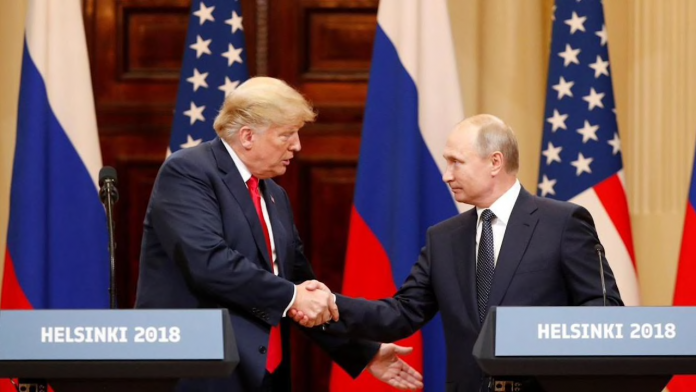
Russia, Israel and the Trump-Putin Summit

[At the] July 16 meeting in Helsinki between US President Donald Trump and Russian President Vladimir Putin ..., the two leaders were ...apparently able to discuss ...a common concern for the security of Israel, especially with respect to the current situation in southern Syria.  
At a joint press conference President Putin said in his remarks:
“Also, crushing terrorists in the southwest of Syria – the south of Syria – should be brought to the full compliance with the Treaty of 1974 about the separation of forces – about separation of forces of Israel and Syria.  This will bring peace to Golan Heights and bring a more peaceful relationship between Syria and Israel, and also to provide security of the state of Israel.
Mr. President paid special attention to the issue during today’s negotiations, and I would like to confirm that Russia is interested in this development, and this will act accordingly.  Thus far, we will make a step toward creating a lasting peace in compliance with the respective resolutions of Security Council, for instance, the Resolution 338.”
President Trump also discussed Israeli security in response to a question about Syria:
“We’ve worked with Israel long and hard for many years, many decades.  I think we’ve never — never has anyone, any country been closer than we are.  President Putin also is helping Israel.  And we both spoke with Bibi Netanyahu, and they would like to do certain things with respect to Syria having to do with the safety of Israel.  So in that respect, we absolutely would like to work in order to help Israel, and Israel will be working with us.  So both countries would work jointly....
(You can read the complete transcript here.)
... both the US and Russia are committed to Israel’s security on the Syrian border, including implementation of the 1974 Separation of Forces Agreement which established a zone of separation and force limitation between Israel and Syria. 
Following the press conference, Israel’s Prime Minister Benjamin Netanyahu released a statement thanking both leaders:
“Prime Minister Benjamin Netanyahu commends the abiding commitment of the US and President Donald Trump to the security of Israel, as expressed at the meeting between President Trump and Russian President Vladimir Putin. The friendship between Israel and the US has never been stronger.
 Prime Minister Netanyahu also very much appreciates the security coordination between Israel and Russia and the clear position expressed by President Putin regarding the need to uphold the 1974 Separation of Forces Agreement between Israel and Syria.”
While Israel’s close relationship with the US is well established, Israel’s growing diplomatic and military coordination with Russia is less well known.
Netanyahu was recently in Russia for a “private visit” where he watched the World Cup and met with President Putin.  During the meeting, Netanyahu reiterated the Israeli position that Iran must leave Syria and made the following remarks:
“It is clear that our focus is on Syria and Iran. Our view that Iran needs to leave Syria is well-known; it is not new to you.   Several hours ago a Syrian UAV penetrated Israel’s airspace. We shot it down and we will continue to take strong action against any trickle [of fire] and any infiltration into Israel’s airspace or territory. We expect that everyone will respect this sovereignty and that Syria will strictly abide by the [1974] Separation of Forces Agreement.  The cooperation between us is a central component in preventing a conflagration and deterioration of these and other situations; therefore, I would like to thank you for the opportunity to discuss these matters and, of course, all other issues. Truly, thank you.”
While Israel and Russia have had friendly relations since the end of the Cold War, Israeli engagement with Moscow has been taken to a new level since Russia entered the Syrian civil war in 2015 to back its client, the Assad regime.  To add complexity, the Assad regime has also been backed by Iran and its militias, including the Shi’ite Lebanese terrorist group Hezbollah.
While Israel has had no desire to enter the Syrian civil war, it has provided humanitarian and medical aid to Syrians, and it remains determined to prevent a permanent Iranian presence in Syria – a red line has led to numerous reported Israeli strikes on Iranian bases and fighters in Syria.  Given that Russia is in a loose alliance with the Assad regime and Iran in Syria, Israeli coordination with Russia is necessary at times to avoid unintended conflict with a superpower.  Now that the regime of Syrian President Bashar al-Assad appears to be cementing its victory in Syria, Israel is seeking to persuade Russia to rid Syria of Iranian influence, especially near its border.
Ultimately Israel understands that it is Russia largely calling the shots in Syria, as former US Ambassador to Israel Daniel Shapiro wrote in Haaretz:
“Israel’s Prime Minister Benjamin Netanyahu has to be given considerable credit for his ability to maintain a respectful dialogue with Putin over the past three years, enabling Putin to understand Israel’s security red lines in Syria and its determination to enforce them.
When Russia deployed its military to Syria in 2015, and the Israel-Russia dialogue began in earnest, I was still serving as U.S. Ambassador to Israel. I occasionally received inquiries from colleagues in Washington, some puzzled, others irritated, asking why Netanyahu was ‘cozying up’ to Putin at a time when Russia was killing Syrian civilians and engaging in aggression against Ukraine.
My answer was quite simple: Israel is a small regional power, and all of a sudden, it found that it had a superpower operating in its backyard. Under such circumstances, Israel had no choice but to develop and sustain a productive dialogue with Russia, to ensure that Russia would not do harm to Israel’s security or curtail its freedom of action, as it surely could if it wanted to.
I assured my colleagues that Netanyahu was not the least bit naive about who Putin was, and that the relationship he was building was utilitarian in nature, ensuring Israel would be able to act to defend its security in Syria. No more, no less.  I still believe that today. But the atmosphere in which Israel must navigate its superpower relationships is changing dramatically.”
While Israel’s desire for a good relationship with Russia is understandable, Russia’s interest in Israel’s security appears less clear.  Prof Hillel Frisch has attempted to explain it in an article titled “Why Russia Needs Israel” published by BESA.  He claims that President Putin seeks to create an alliance of minorities against the Sunni majority of the Middle East.  He writes:
“Moscow’s view is clear. The major threat both within and without Russia’s borders is Sunni Islam: within, because the overwhelming majority of Russian Muslims are Sunni; and without, because a Turkey led by a Sunni fundamentalist leader with imperial Ottoman ambitions poses a greater threat than Shiite Iran – especially as most Russian Muslims are not only Sunni but broadly related to Turkic ethnicity. Hence Putin’s determination to preserve the strategic relationship with Iran in Syria and beyond, and hence his perception of Israel’s regional geostrategic importance.  Israel understands the long-term sagacity of the Russian vision, but cannot allow it to be at the expense of its own short-term goals.
For Israel, the Russian vision is plausible only if it works to rid Syria of the Iranian presence, joins forces to topple its Islamist regime, and – until that goal is achieved – helps wean the Alawite regime in Damascus away from Tehran.”
However, Israel has its own interests which appear to differ from Russia in important respects. At the moment they include closer cooperation with its Sunni Arab neighbours who are concerned by Iran’s regional aggression and the prospect of it gaining nuclear weapons – especially Egypt, Jordan, Saudi Arabia and the UAE.
Israel, to its credit, has so far been able to balance its close alliance with the United States, good relations with Russia and growing ties with the Sunni Arab states.  However, while Russia claims it is acting to distance Iran from the Israeli-Syrian border, Israeli military sources confirmed that arecent Syrian army campaign in the area of Daraa, near the border, saw cooperation between the Russians army, Syrian forces, Hezbollah, and pro-Iranian militias.  According to Syrian opposition sources, the operation included meetings between representatives of the Russian army and commanders of pro-Iranian Shi’ite militias, which were held in areas just 30 kilometres from the Israeli border, according to the Times of Israel.
Perhaps when dealing with Russia it is best to remember President Putin’s own words from his joint press conference with President Trump:
“As to who is to be believed and to who is not to be believed, you can trust no one, if you take this.  Where did you get this idea that President Trump trusts me or I trust him?  He defends the interests of the United States of America, and I do defend the interests of the Russian Federation.”

22 July 2018

Perth by-election: responses to the Jewish Community UPDATE

Further to the earlier report on our Questionnaire to candidates in the Perth by-election, we have received an additional response to our questionnaire, from 

  • ARIELLI, Nicole (Animal Justice Party)
The response has been added to the others and is available as follows: