14 April 2013

HONORARY AUSTRALIAN CITIZENSHIP TO BE AWARDED TO RAOUL WALLENBERG


From the office of the Prime Minister, Julia Gillard, Canberra, 15 April 2013:

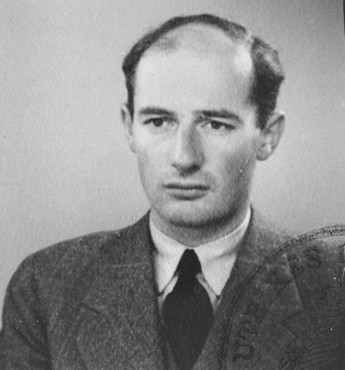
I am pleased to announce that the late Raoul Wallenberg will be recognised as an honorary Australian citizen.
This is the first time that Australia has bestowed such an honour.

Raoul Wallenberg was a Swedish diplomat who led an extraordinary rescue operation in Hungary during World War II.
He saved tens of thousands of Jews from the Holocaust by issuing protective passports and providing shelter in diplomatic buildings. 
Tragically, Raoul Wallenberg did not return to Sweden.  He was arrested by Soviet troops in January 1945 and his fate remains a mystery.
Mr Wallenberg has been recognised as an honorary citizen of the United States of America, Canada, Hungary and Israel.
Many monuments, buildings, streets, schools and other institutions around the world bear his name. 
He was awarded the honour of ‘Righteous among the Nations’ by Yad Vashem, the Jewish people’s living memorial to the Holocaust.
The lives of those he rescued are Mr Wallenberg’s greatest memorial and Australia is honoured to have survivors he rescued living in Australia today.
The Governor-General, Her Excellency Ms Quentin Bryce AC CVO, will host the presentation of a certificate of honorary Australian citizenship at Government House, Canberra, on Monday, 6 May 2013.
The award is made in the year of the centenary of Mr Wallenberg’s birth.
The award of honorary Australian citizenship is symbolic recognition of Mr Wallenberg’s tireless devotion to human life during the Holocaust.

13 April 2013

Hatikva - especially for Yom Hazikaron and Yom Haatzmaut

Israel Prepares for Memorial Day, Independence Day

From Arutz Sheva, 13 April 2013, by Gil Ronen:
Back-to-back holidays drive home a clear message: freedom costs dearly.
 
Independence Day approaches
Israel news photo: Flash 90
Israel is preparing for one of the most emotionally charged weeks of the year: the week in which the Memorial Day for the IDF's Fallen Soldiers and Independence Day are marked, back-to-back.
Memorial Day (Yom Hazikaron) will be marked from Sunday evening until Monday evening.
Independence Day (Yom Haatzmaut) will begin Monday evening, and end Tuesday evening.
This is in keeping with Jewish tradition, in which sunset – and not the hour of midnight – marks the beginning of the new day.
Both holidays are relatively new ones; the 65 years in which Israel has existed are a short time, from the perspective of Judaism's history, which goes back almost 4,000 years. They are not religious holidays.
The Jewish state was founded, in large part, by socialist, secular Jews like David Ben Gurion, who had received a Torah education in their childhood and youth but later broke off with tradition. For them, the Jewish state itself was sacred, as was the military, and the holidays they instituted reflect this approach.
The religious-Zionist Mizrachi movement – currently represented in the Knesset by Bayit Yehudi – sees the Jewish state as a step in the direction of the redemption of the Jewish people, as predicted by the Torah. The members of the movement therefore ascribe deep meaning to Independence Day and Memorial Day, and Deputy Religions Minister Rabbi Eliyahu Ben-Dahan's instruction to religious councils to fly the flag on the upcoming holidays reflects this approach.
Memorial Day for the IDF's Fallen Soldiers is gaining more profound meaning for the religious Zionist sector from year to year, as an increasingly large share of the IDF's combat ranks is filled by religious Zionists.

12 April 2013

Brennan Signals 'Our Saudi Partners'

From American Thinker, March 7, 2013, by Ken Blackwell and Bob Morrison*:

When President Obama met Saudi King Abdullah in London in 2009, the former bowed low before the latter.  No American president had ever so abased himself before one of the world's most oppressive rulers before.
Grim Brennan with Smug Obama
[Photograph: Jim Lo Scalzo/EPA]

Now, Mr. Obama has nominated John Brennan to be director of the Central Intelligence Agency.  
Signals Intelligence, or sigint, is the science of interpreting signals sent by enemies of the United States.  With his Arabic-language skills, John Brennan ought to be good at interpreting signals.
He's very good at sending them.  When he spoke of Jerusalem -- his "most loved city in the world" -- he referred to it first by its Arabic name, al Quds.  Nobody refers to Jerusalem as al Quds unless he wants to send a signal: "I agree with you."
Every Arabic-speaking country denies the right of Israel to exist.  Every one yearns to see Jerusalem swept free of Jews and called al Quds.  When the Jordanians controlled East Jerusalem (1949-1967), they banned all the Jews from living there and from visiting Jewish holy places there.  They even desecrated thousand-year-old graves in Jewish cemeteries there.
That's what is meant by al Quds.  When you say you love this city more than any other and give it its Arabic name, you are sending the most terrible message.  You are feeding into the Arab narrative that calls the establishment of the Jewish state Nakba -- the Day of Catastrophe.
John Brennan obviously rejects Winston Churchill's advice to Western statesmen: "Let the Jews have Jerusalem. It is they who made it famous."  Churchill was no enemy to Arabs.  Churchill even created Jordan as an Arab state and gave it a Hashemite ruling family.
But Churchill would not abase himself and the British people before these desert despots.  As President Obama has done to us as Americans.  As John Brennan is doing to us and to our allies in Israel.
John Brennan speaks of "our Saudi partners."  Partners in what?  Mr. Brennan won't speak of a global war on terror.  He rejects the use of jihadism to describe Muslim terrorists, since he regards jihad as a legitimate expression of a religion of peace and tolerance.
How tolerant is Saudi Arabia?  Mr. Brennan might consult our own U.S. State Department Report on International Religious Freedom:
Freedom of religion is neither recognized nor protected under the law and is severely restricted in practice. ... The [Saudi] legal system is based on the government's application of the Hanbali School of Sunni Islamic jurisprudence. The public practice of any religion other than Islam is prohibited, and there is no separation between state and religion.
If the Saudis will not cooperate with us on basic human rights, like freedom of speech and religion, might they at least be "our partners" in fighting al-Qaeda, right?  After all, al-Qaeda says it wants to overthrow King Abdullah, the man to whom Mr. Obama shows obeisance.
The Report of the 9/11 Commission shows that the Saudis are not willing to help us even on this.  In 1998, Vice President Al Gore traveled to Saudi Arabia to seek then-Crown Prince Abdullah's help in questioning Madani al Tayyib.  Tayyib was a leading finance officer of al-Qaeda, held by the Saudis since 1997.  The official report on Gore's failed diplomatic mission ends with this line: "The United States never obtained this access."
Had we been able to "follow the money," we might have unraveled the al-Qaeda plot to attack the United States.  We may never know if by interrogating Tayyib we could have saved thousands of American lives and trillions of American dollars.
This much should be clear: the Saudis are not "our partners," as John Brennan says they are.  When American lives are at stake, the Saudis are no friends.
John Brennan came away from his CIA tour in Saudi Arabia in the late 1990s filled with nothing but goodwill and admiration for what he calls our Saudi partners.  Was he there when Al Gore begged for the Saudis' help?
Brennan's astonishing naivety alone should raise serious doubts about his serving as director of America's most sensitive intelligence agency.  Every American who cherishes liberty and security has a right to be alarmed at such a disastrous choice for DCIA -- and appalled by a president who could make it.
*Ken Blackwell and Bob Morrison are senior fellows with the Family Research Council, in Washington, D.C.

11 April 2013

Baroness Margaret Thatcher, Israel and the Jewish people

From AIJAC, 12 April 2013, by Talia Katz:
Baroness Margaret Thatcher, Britain's Conservative Prime Minister from 1979-1990, and MP for Finchley and Golders Green from 1959-1992 died of a stroke at the age of 87 on Monday April 8 2013.
Thatcher's reputation as the "Iron Lady" reflected her self-proclaimed status as a conviction politician, and this is echoed in the eulogies delivered following her death. Though her legacy has divided opinion, when it came to Israel and the Jewish people, she is remembered for her strong, supportive and effective foreign policy credentials, and her dedication to fighting antisemitism in all its guises.
As a member of Parliament, representing a large Jewish constituency, and as Britain's longest serving PM in over a hundred years, Thatcher was widely recognised as both a true friend and strong ally to the Jewish people and to the State of Israel.
World leaders - in Britain, in Europe, in the US and in Australia - have lined up to pay their respects to the woman who famously announced she was "not for turning."
In Israel, Prime Minister Benyamin Netanyahu released a statement honouring her character.
Today I mourn the passing of Prime Minister Baroness Margaret Thatcher. She was truly a great leader, a woman of principle, of determination, of conviction, of strength; a woman of greatness.
She was a staunch friend of Israel and the Jewish people. She inspired a generation of political leaders. I send my most sincere condolences to her family and to the government and people of Great Britain.
Israel's President Shimon Peres, a personal friend of Baroness Thatcher, spoke reverentially about his late friend and colleague. 
Lady Thatcher was an exceptional leader, a colleague in the international arena and friend, for me personally, and for my country. I've never seen a more courageous and clear-minded leader like her. She was a true and dedicated friend of Israel, who stood with us in times of crisis, and used her influence to help us in trying to make peace. During our negotiations with the Jordanians and the King himself, in the late 1980s, she stood as a mediator, and source of wisdom for me and for the kind of Jordan, the late King Hussein. I send my sincere condolences to her family, her friends and the people of Great Britain; we shall remember her always with great admiration and hope. God bless her memory.
British Ambassador to Israel Matthew Gould told Israel Hayom that Thatcher had been "a very strong friend of Israel."
From the very early days she made it clear in the things she said and the things she did that she believed in Israel and that she was a friend of the Jewish people. She represented a constituency in London which was one of the places where many of the Jewish community lived, and she had a very clear affection for the Jewish community.
Ambassador of Israel to the United Nations Ron Prosor wrote in Haaretz that Thatcher's legacy is "a torch of moral clarity" for those who would defend democracy and freedom in the Middle East today.
In her economic and foreign policies, Thatcher emphasized self-reliance and self-preservation. She saw the forces of freedom being subverted and undermined by the most dangerous of totalitarian ideologies. She had the courage and the chutzpah to speak out against these dangers - even when it was more politically convenient to simply turn a blind eye.
It is no surprise that the Baroness was a great admirer of the State of Israel. Unlike many of her fellow members of Parliament, the Iron Lady had the ability to see Israel for what it was: a bastion of liberty in the world's greatest hotbed of tyranny. As she herself once put it-in a statement quite fitting for Israel's upcoming Independence Day-"the political and economic construction of Israel against huge odds and bitter adversaries is one of the heroic sagas of our age.
Thatcher belonged to a generation of luminaries that is slowly fading. She stood shoulder-to-shoulder with visionaries who never hesitated to stand up for basic values of human decency. Like Winston Churchill, her predecessor, Thatcher had no delusions about the threats that free-loving peoples face - and the steps that a democracy must take to defend itself from those who seek to do it harm.
In fact, her political activism found expression at an early age, during the horrors of World War II. In a famous anecdote as related by Charles C Johnson in Tablet Magazine: 
In 1938, Edith Muhlbauer, a 17-year-old Jewish girl, wrote to 17 Muriel Roberts, Edith's pen pal and the future prime minister's older sister, asking if the Roberts family might help her escape Hitler's Austria. The Nazis had begun rounding up the first of Vienna's Jews after the Anschluss, and Edith and her family worried she might be next. Alfred Roberts, Margaret and Muriel's father, was a small-town grocer; the family had neither the time nor the money to take Edith in. So Margaret, then 12, and Muriel, 17, set about raising funds and persuading the local Rotary club to help.
Edith stayed with more than a dozen Rotary families, including the Robertses, for the next two years, until she could move to join relatives in South America. Edith bunked in Margaret's room, and she left an impression. "She was 17, tall, beautiful, evidently from a well-to-do family," Thatcher later wrote in her memoir. But most important, "[s]he told us what it was like to live as a Jew under an anti-Semitic regime. One thing Edith reported particularly stuck in my mind: The Jews, she said, were being made to scrub the streets." For Thatcher, who believed in meaningful work, this was as much a waste as it was an outrage. Had the Roberts family not intervened, Edith recalled years later, "I would have stayed in Vienna and they would have killed me." Thatcher never forgot the lesson: "Never hesitate to do whatever you can, for you may save a life," she told audiences in 1995 after Edith had been located, alive and well, in Brazil.
In a Wall Street Journal  obituary, Andrew Roberts noted that Thatcher considered this act of charity to be the greatest single achievement of her life.
That this event so stood out for Thatcher reveals a strong worldview centered on waging the battle against human suffering under totalitarian governments. This was clearly evident in her dealings with the former Soviet Union and other dictatorial leaders, and provides lessons for today's international leadership.
When the Soviet propaganda ministry pinned the label "Iron Lady" on her, it was meant to draw attention to her inflexibility. "Any leader has to have a certain amount of steel in them," she replied, "so I am not that put out being called the Iron Lady."
When she was in power, her attitude toward dictatorships' threats and bullying-be it the Argentine junta over the Falkland Islands or Saddam Hussein before the Gulf War-was precisely the tough and uncompromising stance from which the P5+1 group constantly shrinks. The advice she gave to President George H.W. Bush in 1990-"This is no time to go wobbly, George"-is desperately needed today.
The Jerusalem Post's Sean Gannon opined that her respect for and affiliation with Jewish values saw her surround herself with five Jewish Cabinet ministers, as well as Jewish political associates and advisers.
The fact that Thatcher had, in the words of one Jewish Cabinet colleague, "not the faintest trace of anti-Semitism in her make-up" was "an unusual attribute" in a party in which what Geoffrey Howe called "malodorous streaks" occasionally surfaced, most notably during the Leon Brittan affair in the mid-1980s.
Thatcher also greatly admired Judaism's emphasis on family and community.
She frequently praised the manner in which Finchley's Jews looked after their own community welfare and wished that "Christians themselves would take closer note of the Jewish emphasis on self-help and acceptance of personal responsibility." She herself paid far more attention to the social philosophy of the UK's chief rabbi, Immanuel Jakobovits, than she did to that of the Archbishop of Canterbury, to the extent that he was described as the real spiritual leader of Thatcherite Britain. Jakobovits was elevated to the House of Lords in 1988 as a mark of her personal respect, the first rabbi ever to receive this honor.
Thatcher's admiration for the State of Israel is well documented, but she also had a tumultuous relationship with then Likud Prime Minister Menahem Begin, and his conservative colleagues. According to Gannon:
Thatcher's admiration for the Jewish tradition meant that she was instinctively well-disposed toward Israel, which she described as "one of the heroic sagas of our age." She expressed her early support by joining organizations such as the Anglo-Israel Friendship League and the Conservative Friends of Israel while, as a member of the 1970-1974 Conservative government, she frequently asserted Israel's case against the "traditional Tory Arabists" who dominated the Cabinet (for instance, she argued against Israel's inclusion in the regional arms embargo imposed by Britain during the Yom Kippur War).
In fact, so closely was Thatcher identified with Israel in this period that the Foreign Office urged her to sever links with Jewish and pro-Israeli organizations when she became Conservative leader in February 1975 "to counter Arab fears and suspicions that [she was] already a prisoner of the Zionists."
Thatcher laid major blame for the impasse in Middle East peacemaking at the door of the Likud which led government for all but two of her 11 years in power. She harbored considerable distaste for Menahem Begin due to what she described as the Irgun's anti-British "crimes" (in 1983 she forced the withdrawal of Eliahu Lankin's appointment as ambassador to London on the grounds that he had been an Irgun commander) and she was scathingly critical of what she saw as Yitzhak Shamir's "hardline" approach to the Palestinian issue. She believed peace was possible under Shimon Peres, with whom she developed a close working relationship during his 1984-1986 term as prime minister. But she left office with little to show for her efforts. In the words her biographer, John Campbell; "Mrs. Thatcher got nowhere on the Middle East, but she deserves credit for trying."
In Tablet, Charles C Johnson confirms Thatcher's conviction in her principles and beliefs and her propensity to act accordingly, and often in the interests of Jews and Israel.
She made Jewish causes her own, including by easing the restrictions on prosecuting Nazi war criminals living in Britain and pleading the cause of the Soviet Union's refuseniks. She boasted that she once made Soviet officials "nervous" by repeatedly bringing up the refuseniks' plight during a single nine-hour meeting with Mikhail Gorbachev, "The Soviets had to know that every time we met their treatment of the refuseniks would be thrown back at them," she explained in her book The Downing Street Years. Thatcher also worked to end the British government's support for the Arab boycott of Israel. During the Yom Kippur War of 1973, Thatcher criticized Tory Prime Minister Ted Heath's refusal to supply Israel with military parts or even allow American planes to supply Israel from British airfields. In 1986, Thatcher became the first British prime minister to visit Israel, having previously visited twice as a member of parliament.
The Jerusalem Post editorial was full of praise for Thatcher, always independent-minded and driven by her own convictions, despite her clear affinity for the State of Israel.
Thatcher was impressed by the tremendous achievements of the plucky Jewish state as well, though she was consistently critical of Israel's policies vis-à-vis the Palestinians and opposed the Begin government's airstrike on the Osirak nuclear facility in 1981 as well as its decision to invade Lebanon in 1982.
Thatcher's admiration for Israel is expressed clearly in her memoirs: "The political and economic construction of Israel against huge odds and bitter adversaries is one of the heroic sagas of our age. They really made the desert bloom."
Baroness Margaret Thatcher will no doubt be remembered as much for her strength of character and conviction, as her strong leadership on issues of conscience, especially when it came to the Jewish people and the State of Israel.
09 April 2013

Dershowitz Challenges Carter to Human Rights Debate

From Jewish Press, 8 April 2013, by :
I will come, at my own expense, to debate Jimmy Carter on Carter's own human rights record. If Cardozo will have me, I will come and provide the students, the administration and anyone else that is interested, with a first rate debate about the meaning of human rights and they can decide whether what Jimmy Carter has done, constitutes human rights or human wrongs.

alan and jimmy

Alan Dershowitz, Felix Frankfurter professor of law at Harvard Law School, has challenged former president Jimmy Carter to a debate on his human rights record.

Dershowitz spoke ...in response to the news that the Cardozo School of Law’s Journal of Conflict Resolution will be honoring Carter with the “International Advocate for Peace” Award this Wednesday, April 10, as reported that morning.
During the course of the interview, the law professor recounted the widespread death and devastation caused by Carter’s efforts at “human rights.”
“What should be discussed is not Jimmy Carter’s role as a peacemaker, but instead it should be his role as a deal breaker,” said Dershowitz. He then proceeded to tick off the bases for his reasoning.
“First, it was Carter who advised Yassir Arafat not to accept the peace deal offered in 2000-01. That failure led to the deaths of more than 4000 Israelis and Arabs.”
“Secondly, by encouraging and supporting Hamas, and always placing the blame on Israel, Carter has guaranteed the continuation of terrorism.” Indeed, “Carter has embraced Arafat, he’s embraced Mashaal, why, he’s never met a terrorist he didn’t love, and never met an Israeli whom he did.”
“And third,” the professor said, “it was Carter who was responsible for not acting to prevent the death of two million Cambodians at the hands of Pol Pot. Carter was the president of the United States and yet he did not intervene in that slaughter, he did not lead and prod the United Nations to take action.”
Dershowitz paused, to sum up, “Carter has prevented peace, encouraged terrorism and done more than anyone else to isolate and demonize the Middle East’s only democracy, Israel.”
But Dershowitz wasn’t finished.
“Jimmy Carter has distorted the very meaning of human rights, he has turned the concept on its head, what he does should be called ‘human lefts.’”
What does that mean?
“The way human rights should be addressed is based on ‘worst, first,’ you deal with the most egregious wrongs, the worst kind of abuses committed by governments first,” Dershowitz explained. “He’s turned everything upside down. Instead of Israel, just look over a little to the south, “Saudi Arabia is the worst human rights violator in the world: sex segregation, gender preference discrimination, religious discrimination,” that’s where a real human rights activist would focus, said the law professor.
“But Jimmy Carter was bought and paid for by the Saudis. The Carter Center stopped criticizing the Kingdom of Saudi Arabia when the Saudis started funding it.”
So what should be the plan of action with respect to the Cardozo award?
Dershowitz started out by suggesting that when Carter comes to Cardozo, leaflets should be distributed to everyone, including the former president, detailing Carter’s human rights records. But his thoughts continued to develop as he spoke further about the many “failures Carter has orchestrated.”
Turning again to talk about Yassir Arafat, Dershowitz, more slowly this time, explained how Arafat had gone to seek advice from Jimmy Carter, in the run up to Camp David. “And Jimmy Carter advised Arafat not to accept the peace accord.”
“We’d be celebrating 10 years of peace already had Carter not given that disastrous advice to Arafat. Jimmy Carter is primarily responsible – along with Arafat – for the deaths since that time.”
“What’s more,” Dershowitz continued, “Jimmy Carter has not only sown death and destruction by inserting himself in global conflicts, his actions themselves are illegal.” Dershowitz was referring to the Logan Act, passed in 1799 in the wake of the XYZ Affair, which made it a crime for private citizens to conduct foreign policy.
Finally, Dershowitz settled upon the best course of action.
Dershowitz said:
I will come, at my own expense, to debate Jimmy Carter on Carter’s own human rights record. If Cardozo will have me, I will come and provide the students, the administration and anyone else that is interested, with a first rate debate about the meaning of human rights and they can decide whether what Jimmy Carter has done, constitutes human rights or human wrongs.
So, Dean Diller, other administration and faculty, and students on the Cardozo Journal of Conflict Resolution: here is your opportunity to resolve this particular conflict. Jimmy Carter, by all means! come to Cardozo and talk about human rights, but be prepared to have a full discussion, a debate even, with Alan Dershowitz on the topic.
No doubt Yeshiva University, which today issued a statement about the controversial decision, will support the offer made by Dershowitz.
Richard Joel, president of Yeshiva University, under the auspices of which Cardozo operates, took pains to distance himself as well as the school from Jimmy Carter’s history of “statements and actions in recent years which have mischaracterized the Middle East conflict and have served to alienate those of us who care about Israel.”
But Joel concluded by emphasizing how seriously YU takes its obligation “to thrive as a free marketplace of ideas, while remaining committed to its unique mission as a proud Jewish university.”
So, on Wednesday, at Cardozo, what shall it be? Shall we have a true marketplace of ideas, or will only a single stall be open?

06 April 2013

Anti-Israel hackers are hacked ...

The following video was posted by Israeli hackers onto an antisemitic hackers website OpIsrael, who are threatening to "wipe Israel of the Internet map"...


At the time of posting, the OpIsrael site is playing "Hatikva" in the background, and has some useful educational material for anti-Israel "activisits" and antisemites...