|
22 August 2017
Deconstructing a fake "Friend of Palestine"


21 August 2017
BDS camapigners show their colours
Last Sunday afternoon, the Australia/Israel and Jewish Affairs Council (AIJAC) and the United Israel Appeal (UIA) held a public event at a local Jewish School hall

Rabbi Shalom White, from Perth's Chabad congregation, attended the AIJAC/UIA event, together with his children.
As they approached the venue and saw about ten protesters at a Boycott ("BDS") rally, chanting “free, free Palestine…” and holding placards reading “Palestine will be free, from the river to the sea”. They stopped to take a selfie with the rally as background.
When the Rabbi and his children arrived at the entrance to the venue, with the BDS rally on the opposite side of the street, the BDS rallyists shouted “Shame on you: child murderers!”
The Rabbi responded: “My children go to this school. They must be protected by these same guards you see here, because of the possibility of a terrorist attack targeting Jewish children. Are their lives worth less than Arab children’s lives?”
BDS rally: “YES! You brought it on yourselves…”
Rabbi White: “Are you saying that my child's life is not worth anything?”
BDS: “Shame on you, child murderers!”
 Rabbi White posted this selfie on his Facebook account with the caption: “Got a selfie with my kids, they called me and my kids child murderers and said that is justified for my children to be killed by terrorists.”

Rabbi Shalom White, from Perth's Chabad congregation, attended the AIJAC/UIA event, together with his children.
As they approached the venue and saw about ten protesters at a Boycott ("BDS") rally, chanting “free, free Palestine…” and holding placards reading “Palestine will be free, from the river to the sea”. They stopped to take a selfie with the rally as background.
When the Rabbi and his children arrived at the entrance to the venue, with the BDS rally on the opposite side of the street, the BDS rallyists shouted “Shame on you: child murderers!”
The Rabbi responded: “My children go to this school. They must be protected by these same guards you see here, because of the possibility of a terrorist attack targeting Jewish children. Are their lives worth less than Arab children’s lives?”
BDS rally: “YES! You brought it on yourselves…”
Rabbi White: “Are you saying that my child's life is not worth anything?”
BDS: “Shame on you, child murderers!”

13 August 2017
Our ABC is sleeping with our enemies
From The Australian, August 14, 2017, by Jennifer Oriel:
Imagine waking up in Afghanistan this morning. You are in a foreign country fighting a long war against international jihad. You joined the Australian army because you love your country. You love your country so much that you are prepared to sacrifice your life to keep Australians safe from terror. You serve because the war for freedom and democracy, global peace and safety is a war worth fighting. Every house surrendered to the Taliban is a girl who will never know freedom.
But the human face of war is lost in the slow grind of nation-building for a country that isn’t yours. Maybe troops feel they are fighting someone else’s war and it erodes morale. There will be no heroes’ welcome when they return home. Instead, there will be Al Jazeera on the ABC and political correctness from Canberra.
The ABC’s deal with Al Jazeera compromises the credibility of the national broadcaster. The Al Jazeera network is owned by Qatar’s ruling family. Qatar harbours Taliban leaders and reportedly supports other Islamist interests that Australian troops are fighting in the region. David Kirkpatrick wrote in The New York Times:
We might expect Australia’s publicly-funded media to ride with us in the war on international jihad. Yet the ABC’s Al Jazeera coverage of the Western war on terror often seems to align with Qatari foreign policy. It promotes porous Western borders and mass migration from Islamist states to the West while casting our military action to prevent Islamist incursion in a negative light. It frequently plays down the risk that the movement for international jihad poses to the free world. Israel is commonly demonised while some of the Islamic world’s worst violators of human rights are liberated from sustained scrutiny.
Qatar’s relationship to the Taliban is highly problematic. In 2013, the Taliban Afghanistan Political Office was opened in Doha. Qatar’s assistant foreign minister cut the ribbon at the official opening ceremony of what has become known as the Taliban embassy. Obama administration officials supported its establishment. Under a subsequent prisoner swap deal between the US and Qatar, the administration freed five Taliban leaders from Guantanamo Bay in exchange for a US soldier being held by the Taliban, Bowe Bergdahl. He was feted by Democrats despite allegations that he might have deserted his post in Afghanistan before being taken by the Taliban. Bergdahl will stand trial in October for desertion and misbehaviour before the enemy.
Republican senator John McCain described the “Taliban five” freed by the Obama administration as “the hardest of the hard core. These are the highest high-risk people.” Notably, the UAE rejected the administration’s proposal to take the Taliban five because the Taliban would not agree to three conditions stipulated by the US. In a letter to The New York Times, UAE ambassador to Washington Yousef Al Otaiba listed the conditions as, “the Taliban must denounce al-Qa’ida and its founder, Osama bin Laden … recognise the Afghan constitution … renounce violence and lay down their weapons”. Qatar reportedly accepted the jihadis without requiring the Taliban to observe any of the conditions.
The relationship between Qatar and the Taliban raises the question of credibility and bias in regard to the Al Jazeera network. Last month, Jewish leaders raised specific concerns in News Corp papers about the ABC’s coverage of Israeli affairs. Executive director of the Australia/Israel & Jewish Affairs Council Colin Rubenstein wrote in this paper:
It is unclear why the government is not addressing potential political bias produced by Al Jazeera’s partnership with the ABC. Perhaps the matter is complicated by the government’s reluctance to list the Taliban as a proscribed terrorist organisation. It is clearly dishonourable to make Australians pay for the distribution of news financed by a state that backs our military enemies. Under conditions of war, such material might be called propaganda.
Imagine waking up in Afghanistan this morning. You are in a foreign country fighting a long war against international jihad. You joined the Australian army because you love your country. You love your country so much that you are prepared to sacrifice your life to keep Australians safe from terror. You serve because the war for freedom and democracy, global peace and safety is a war worth fighting. Every house surrendered to the Taliban is a girl who will never know freedom.
But the human face of war is lost in the slow grind of nation-building for a country that isn’t yours. Maybe troops feel they are fighting someone else’s war and it erodes morale. There will be no heroes’ welcome when they return home. Instead, there will be Al Jazeera on the ABC and political correctness from Canberra.
The ABC’s deal with Al Jazeera compromises the credibility of the national broadcaster. The Al Jazeera network is owned by Qatar’s ruling family. Qatar harbours Taliban leaders and reportedly supports other Islamist interests that Australian troops are fighting in the region. David Kirkpatrick wrote in The New York Times:
“Qatar has for many years helped support a spectrum of Islamist groups around the region by providing safe haven, diplomatic mediation, financial aid and, in certain instances, weapons.” The Egyptian media reports that: “Qatar is using groups such as the Taliban, Islamic State … for its own protection.”Since 2001, Australia has fought its longest war to liberate Afghanistan from the Taliban. By May this year, 42 Australian personnel had died. The US Department of Defence reports that 2216 American lives have been lost in the struggle to free Afghanistan from jihadism. Among them 1833 were killed in action. And the Taliban hasn’t stopped killing our allies. This month, US troops were killed by a Taliban suicide bomber attacking a convoy. Islamic State has emerged in the country also. When Western forces retreat, jihadis strike. The US and Australia have sent additional troops to consolidate democratic nation-building efforts in Afghanistan, taking the number of our personnel to 300.
We might expect Australia’s publicly-funded media to ride with us in the war on international jihad. Yet the ABC’s Al Jazeera coverage of the Western war on terror often seems to align with Qatari foreign policy. It promotes porous Western borders and mass migration from Islamist states to the West while casting our military action to prevent Islamist incursion in a negative light. It frequently plays down the risk that the movement for international jihad poses to the free world. Israel is commonly demonised while some of the Islamic world’s worst violators of human rights are liberated from sustained scrutiny.
Qatar’s relationship to the Taliban is highly problematic. In 2013, the Taliban Afghanistan Political Office was opened in Doha. Qatar’s assistant foreign minister cut the ribbon at the official opening ceremony of what has become known as the Taliban embassy. Obama administration officials supported its establishment. Under a subsequent prisoner swap deal between the US and Qatar, the administration freed five Taliban leaders from Guantanamo Bay in exchange for a US soldier being held by the Taliban, Bowe Bergdahl. He was feted by Democrats despite allegations that he might have deserted his post in Afghanistan before being taken by the Taliban. Bergdahl will stand trial in October for desertion and misbehaviour before the enemy.
Republican senator John McCain described the “Taliban five” freed by the Obama administration as “the hardest of the hard core. These are the highest high-risk people.” Notably, the UAE rejected the administration’s proposal to take the Taliban five because the Taliban would not agree to three conditions stipulated by the US. In a letter to The New York Times, UAE ambassador to Washington Yousef Al Otaiba listed the conditions as, “the Taliban must denounce al-Qa’ida and its founder, Osama bin Laden … recognise the Afghan constitution … renounce violence and lay down their weapons”. Qatar reportedly accepted the jihadis without requiring the Taliban to observe any of the conditions.
The relationship between Qatar and the Taliban raises the question of credibility and bias in regard to the Al Jazeera network. Last month, Jewish leaders raised specific concerns in News Corp papers about the ABC’s coverage of Israeli affairs. Executive director of the Australia/Israel & Jewish Affairs Council Colin Rubenstein wrote in this paper:
“Qatar’s ruling family, the owner of Al Jazeera, is one of the main supporters of Hamas — a terror group committed to Israel’s destruction.”In June, Lateline host Emma Alberici interviewed Iranian academic Mohammad Marandi after jihadis attacked the Iranian parliament. Despite Islamic State taking responsibility for the attacks, Iran’s Revolutionary Guard shifted the blame to Saudi Arabia and Donald Trump. Half-way through the interview, Marandi hadn’t mentioned Trump. Alberici prompted him twice. After her second prompt (where she called Trump’s condolences to Iran “provocative”), Marandi unleashed a tirade against the West. He said: “The United States is the country that created this whole mess. They helped create the extremists in Afghanistan with the Saudis. 9/11 was blowback … the whole region is collapsing and this is largely due to American policies … if there’s one country in the world that’s responsible for … the export of terrorism across the world, it is the United States. It chooses Israel which is an apartheid regime.” Alberici didn’t correct him.
It is unclear why the government is not addressing potential political bias produced by Al Jazeera’s partnership with the ABC. Perhaps the matter is complicated by the government’s reluctance to list the Taliban as a proscribed terrorist organisation. It is clearly dishonourable to make Australians pay for the distribution of news financed by a state that backs our military enemies. Under conditions of war, such material might be called propaganda.
10 August 2017
Recognizing a Palestinian State before a Peace Agreement with Israel Undermines the International Rule of Law
From the JCPA, Vol. 17, No. 22, August 7, 2017, by Peter Wertheim:
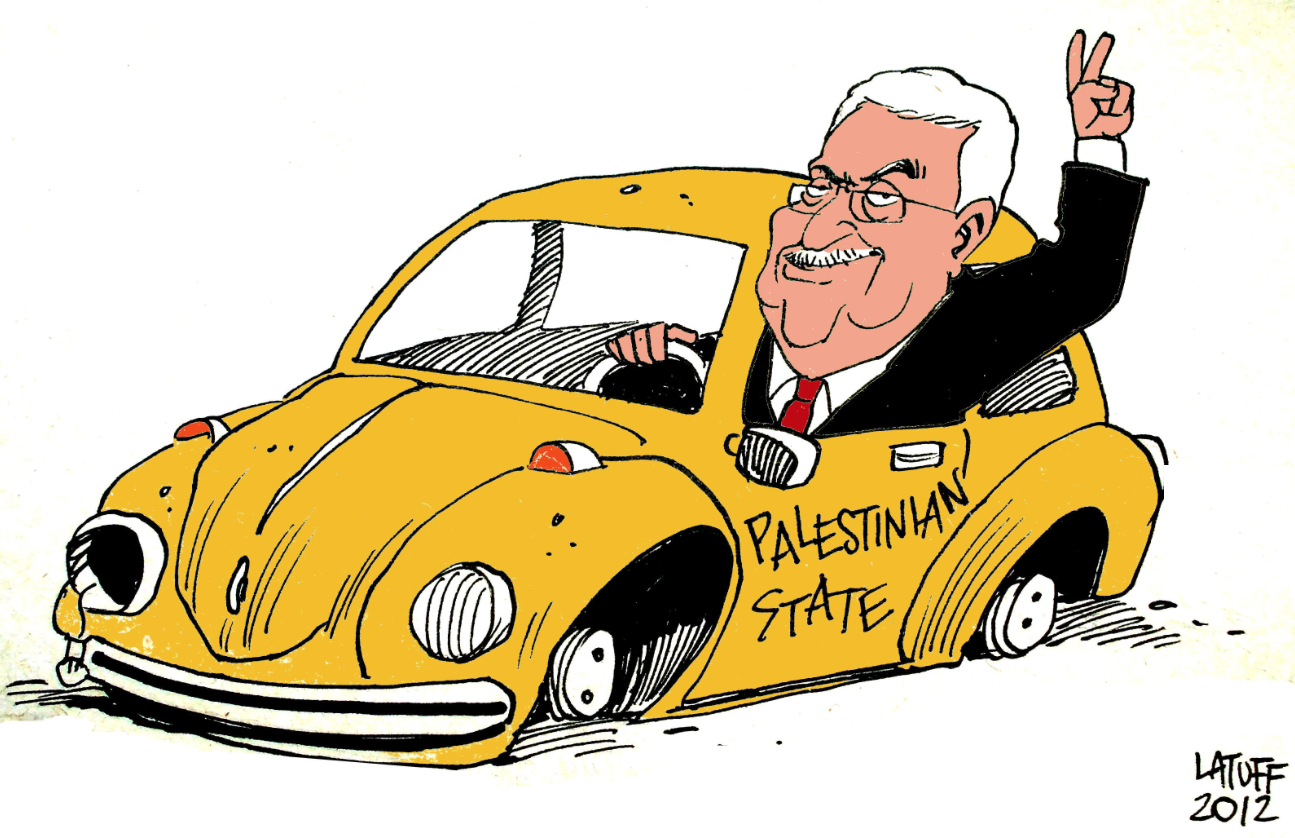
The following is a brief overview only. Follow the link to the full article.
The following is a brief overview only. Follow the link to the full article.
- Among those who advocate immediate recognition of a Palestinian state, without a peace agreement with Israel, there is a striking irony in the contrast between the legalistic approach they purportedly adopt on one question, namely settlements, and their cavalier disregard for well-established legal principles on another, namely the creation of states and their recognition. One either supports the international rule of law as a general principle or not at all. One does not get to pick and choose.
- The four criteria of statehood set out in Article 1 of the Montevideo Convention on the Rights and Duties of States, 1933, are widely accepted as the minimum required by customary international law for the creation of a new state. Two of the criteria – a single, centralized government and the capacity to enter into relations with other states – are manifestly not satisfied by any Palestinian entity.
- The internal divide between the secular nationalist movement among Palestinians, represented by the PLO and Palestinian Authority (PA) which controls parts of the West Bank, and the theocratic movement, represented by Hamas which controls the Gaza Strip, has resulted in internecine violence on many occasions. All attempts at internal reconciliation have failed and appear to be intractable. They are at loggerheads on the most basic questions, not only concerning peace with Israel and other issues of foreign and domestic policy but also on the essential nature of a future Palestinian State. Thus, for reasons which are entirely internal to Palestinian society, there is no reasonable prospect for the foreseeable future of any government being formed which would exercise effective control over both the West Bank and the Gaza Strip, and would have the capacity to give effect to any agreements purportedly entered into by “Palestine.”
- Although recognition is a political act and a matter of discretion, it is “subject to compliance with the imperatives of general international law.” Given that the criteria of government and the capacity to enter into relations with other States are at present not satisfied by any Palestinian entity, recognition of any such entity as a State would be to affirm a fiction, contrary to the imperatives of general international law. Recognition by even a large number of other States cannot overcome clear and compelling objective evidence indicating that the mandatory legal criteria of statehood have not been met. An exception would be admission of the entity as a member State of the UN. If, notwithstanding its admission to the UN as a member State, the entity does not, in fact, meet the customary law criteria of statehood, at law it is still a State, albeit a failed State.
- Applying the additional requirements for recognition contained in the European Community Declaration and Guidelines (1991), the Palestinians have failed, and are likely to continue for the foreseeable future to be unwilling to make commitments to respect the inviolability of the frontiers with Israel, to repudiate all territorial claims by Palestine against Israel and to settle all disputes with Israel by peaceful means.
- Recognition of a Palestinian State at the present time would not only be contrary to the well-established requirements for statehood stipulated by customary international law and the additional requirements mandated by the European Community Declaration and Guidelines in 1991. It would also contravene the internationally recognized and witnessed Oslo Accords between the Palestinians and Israel and lay the foundations for opening a new phase of the Palestinians’ conflict with Israel, rather than for resolving the conflict. Recognition would, therefore, undermine the primary purposes of the UN Charter and the current international rules-based order, which is to maintain international peace and security.
This is a brief overview only. Follow the link to the full article.
South Australian Legislative Council Rejects unilateral recognition of "Palestine"
10 August 2017
South Australia's Legislative Council passed a sensible and constructive resolution on promoting Middle East peace.
The resolution, passed yesterday evening by a vote of 11 to 10, calls for a "two-state solution" between Israel and the Palestinians, "both sides to resume direct negotiations in good faith" and "the commonwealth government to recognise the state of Palestine once the two sides have successfully negotiated a two-state solution, as required by international law as set out in the Oslo Accords."
This stands in contrast to a resolution passed by the South Australian House of Assembly in late June, which mentioned only Israeli settlements as a "major obstacle to peace" and called "on the commonwealth government to recognise the state of Palestine (as we have recognised the state of Israel) and announce the conditions and time lines to achieve such recognition", implying that such recognition should occur regardless of any progress toward a peace agreement between the sides. The same motion was put to the Legislative Council, but was defeated.
AIJAC Executive Director Dr. Colin Rubenstein, who was in the South Australian Legislative Council to witness the historic vote, said, "Credit goes especially to Andrew McLachlan of the Liberal party - with help from other Liberal members, Corey Bernardi's Australian Conservatives, and John Darley of the Nick Xenophon Team - for his leadership in steering the passage of this sensible and constructive resolution. A degree of dignity and common sense has now been restored to the South Australian Parliament through the Legislative Council's rejection of the ahistorical, one-sided and counterproductive resolution passed in the lower house in June, and its replacement by a resolution which actually serves the cause of peace."

Dr. Rubenstein noted that following the vote, South Australian Parliamentary Friends of Israel met with visiting Israeli strategic analyst Dr. Eran Lerman, who congratulated the members on the vote just taken. Dr. Lerman explained why the vote was so important - arguing the lower house vote does no favours to Palestinians by encouraging them to believe they can advance their goal of a state without ending the conflict, or engaging in negotiations and mutual compromise with Israel.
South Australia's Legislative Council passed a sensible and constructive resolution on promoting Middle East peace.
The resolution, passed yesterday evening by a vote of 11 to 10, calls for a "two-state solution" between Israel and the Palestinians, "both sides to resume direct negotiations in good faith" and "the commonwealth government to recognise the state of Palestine once the two sides have successfully negotiated a two-state solution, as required by international law as set out in the Oslo Accords."
This stands in contrast to a resolution passed by the South Australian House of Assembly in late June, which mentioned only Israeli settlements as a "major obstacle to peace" and called "on the commonwealth government to recognise the state of Palestine (as we have recognised the state of Israel) and announce the conditions and time lines to achieve such recognition", implying that such recognition should occur regardless of any progress toward a peace agreement between the sides. The same motion was put to the Legislative Council, but was defeated.
AIJAC Executive Director Dr. Colin Rubenstein, who was in the South Australian Legislative Council to witness the historic vote, said, "Credit goes especially to Andrew McLachlan of the Liberal party - with help from other Liberal members, Corey Bernardi's Australian Conservatives, and John Darley of the Nick Xenophon Team - for his leadership in steering the passage of this sensible and constructive resolution. A degree of dignity and common sense has now been restored to the South Australian Parliament through the Legislative Council's rejection of the ahistorical, one-sided and counterproductive resolution passed in the lower house in June, and its replacement by a resolution which actually serves the cause of peace."

SA Parliamentary Friends of Israel event (L-R) Dr. Colin Rubenstein, John Gardner MLA, Andrew McLachlan MLC, Dr. Eran Lerman, Sam Duluk MLA, Dennis Hood MLC, Norman Schueler
Dr. Rubenstein noted that following the vote, South Australian Parliamentary Friends of Israel met with visiting Israeli strategic analyst Dr. Eran Lerman, who congratulated the members on the vote just taken. Dr. Lerman explained why the vote was so important - arguing the lower house vote does no favours to Palestinians by encouraging them to believe they can advance their goal of a state without ending the conflict, or engaging in negotiations and mutual compromise with Israel.
23 July 2017
Israeli Sovereignty Over the Temple Mount Is Crucial for Peace
From BESA Center Perspectives Paper No. 539, July 24, 2017, by Prof. Hillel Frisch:

Temple Mount, Dome of The Rock, Jerusalem, Israel
Regardless of its direct security merits, Israel’s decision to place metal detectors at the entrances to the Temple Mount has been transformed by adversaries and Israel alike into an issue of sovereignty over the Temple Mount. Power-sharing there has always constituted a slippery slope to disaster.
The murder of two Israeli policemen at the Temple Mount is an appropriate moment to rectify the situation by reasserting Israeli sovereignty over the holy site.
Why is Israeli sovereignty over the Temple Mount so important? Because international “partnership” arrangements in political hotspots not only rarely (if ever) work, but make matters much more volatile and dangerous. At the Temple Mount, only exclusive Israeli sovereignty can work.
Many partnerships over contested areas have been attempted, and they have led to only one outcome: failure. In 1949, for example, the UN tried to broker deals between Israel and Syria over demilitarized zones delimited in the Armistice Agreement. The three areas were perennial hotspots over which much blood was shed. They were only resolved (as are most Middle Eastern political conflicts) by a decisive victory and the establishment of Israeli sovereignty over the Golan Heights. Before that, it was bedlam. Since then, there have been 40 years of quiet.
In Jordan, after the 1967 Six Day War, Arab states tried to broker power-sharing arrangements over Jordanian territory between the beleaguered Hashemite monarchy and the Palestinian terrorist organizations. During three years of bargaining and meddling, massive firefights took place between the two sides in which hundreds if not thousands of civilians were killed.
This was but a prelude to the final showdown when the monarchy said enough is enough: sovereignty now. That period, dubbed Black September (1970), was in fact the beginning of a full year of bloodletting. It ended only when the Jordanian monarchy won a decisive victory.
The Jordanian victory was so decisively won that hundreds of Palestinian terrorists fled westward into Israeli hands to avert the fate that awaited them. Only then did the Jordanian state achieve the Biblical “40 years of peace.” Ironically, Amman is now demanding that Israel share sovereignty, a prescription that proved disastrous in its own political history.
The same goes for Lebanon. Arab attempts to induce a partnership over sovereignty between the Lebanese state and the Palestinians after the Six Day War ended in unprecedented violence. Unfortunately, the Lebanese state, unlike Jordan, has never been able to reassert sovereignty. The result is that Lebanon suffers from perennial internal political violence only a powder keg away from reverting back to the fifteen-year civil war that more or less ended in 1989.
In Cyprus, attempts by foreign powers to establish power-sharing between the Greek and Turkish populations resulted in violence and have never succeeded. Peace came when the Turkish invasion of 1974 achieved a decisive victory resulting in the partition of the island.
Fast-forward to the Oslo “peace” process. There, too, the paradigm was built on shared power. Informally, in Jerusalem, the Palestinian Authority (PA) controlled east Jerusalem through Orient House, Faisal Husseini’s political headquarters.
Husseini, dubbed a peace advocate, in fact headed the Fatah militia, the Tanzim, in Jerusalem. The PA police frequently kidnapped east Jerusalemites suspected of being informants or who were accused of selling land to Jews, as well as journalists (on rarer occasions) who took a critical view of the PA.
Advocates of the “peace” process often pointed to that “partnership” as a success. In September 1996, however, riots over the tunnel built along the Western Wall – riots that cost the lives of 25 Israeli security personnel who were killed by heavily armed members of the Palestinian security forces – dispelled that illusion. Never before had tens of Israeli security force personnel been killed in firefights with Palestinians in an Israeli-controlled area.
Alas, bowing to international pressure, Israel did not close down Orient House, and paid the price tenfold during the “al-Aqsa Intifada.” Ultimately, Israeli “cohabitation” with the PA in east Jerusalem came to an end – at least on the purely political level – with the closing of Orient House in August 2001 and the Defensive Shield offensive nine months later. Once again, decisive victory and the imposition of exclusive Israeli sovereignty over Jerusalem brought about a relatively durable peace.
Many in Israel, as well as foreign actors such as the PA and Jordan, are now calling on Israel to repeat the costly mistake of persevering in the illusion of power-sharing over the Temple Mount. They want not only Israeli cooperation with the Waqf but also considerable augmentation of Waqf personnel.
There is no doubt that Israel will make a decisive move to reassert the sovereignty it has lost over the past three decades on the Temple Mount, just as it rid Jerusalem of Orient House and destroyed terrorist sanctuaries in major PA towns in 2002. The question is, why wait until more Israelis and Palestinians have been killed or maimed before acting to ensure decisive victory and the reassertion of Israeli sovereignty?
Israel is a light unto the nations that surround it. Their populations widely acknowledged this when Israel sent a former prime minister and president to jail – a move unthinkable in a region plagued by violence and dictatorship.
Now is the time for Israeli sovereignty to shine on the Temple Mount, for the benefit of Muslims and Jews alike.
22 July 2017
Man pretending to be "in the middle"
John Lyons, journalist for The Australian, and inveterate Israel-basher, published a self-serving article in this weekend's Australian Magazine, promoting his book.
I attempted, twice, to post the following comment below the article, but it was deleted. (And Lyons is the one complaining about intimidation and censorship.)

John Lyons
Here's the comment:
And along comes John Lyons, decades into
this century-long conflict, to sit on his luxurious balcony waiting for the
next “really bad” flare-up of violence, to photograph and bear witness to armed
soldiers confronting stone-throwing children. And he portrays all objections to
his myopic interpretation of events around him, as “intimidation” ...
I attempted, twice, to post the following comment below the article, but it was deleted. (And Lyons is the one complaining about intimidation and censorship.)
John Lyons
Here's the comment:
Lyons asks “Are there any factual mistakes
in it?” ... as if the specific details he chooses to examine are all we need to
know. But the accuracy of the facts and images he cherry-picks for his stories
is not the sole determinant of the extent of his bias.
By his own admission, Lyons based himself
on “the best balcony in Jerusalem” which he regards as his “base” and “private
time machine”. Ensconced in his foreigner’s bubble, Lyons scans the environment
for juicy stories that fit the narrative he has swallowed, hook, line and
sinker. “If things were really bad ...Sylvie and I would jump into our car and
head towards the trouble spot...”
Well, if all you have is a hammer, then
everything looks like a nail. And that sums up Lyons’ body of work from his
private balcony. If you accept, as Lyons apparently, long ago, has done, that
that Israel is an illegitimate Western, colonial implant that has dispossessed
a blameless, innocent people, then every act of self-defense by Israel can be
portrayed as an example of Jewish fascism.
As a fig leaf for his blatant bias, Lyons grudgingly
acknowledges that “some of these children should ...be seriously dealt with...”,
but he nevertheless churns out dozens of “stories” about the treatment of defenseless
children by well-equipped Israeli soldiers. How many stories has he devoted to
the thousands of Jewish men, women and children murdered on the streets, in
their homes and in their beds by generations of Arabs nurtured and groomed,
from their cradles, to hate and murder?
The Arabs persecuted the Jews in Palestine
from the 1920s, and launched a relentless campaign, against their own interests,
to obliterate the Jewish national revival …before any “occupation” and even
before the establishment of the State of Israel. Since their self-inflicted,
violent and catastrophic rejection of the 1947 UN partition, misguided,
self-serving Arab leaders have kept the refugees of their 1948 war, and their
descendants, in squalor and dependent on international aid, as cannon fodder,
fed on hatred and false hope, and squandered repeated opportunities for
statehood and economic progress.
Subscribe to:
Posts (Atom)