09 February 2015

Obama sets a course to hell in the Middle East

From The New English Review, February 2015, by Jerry Gordon:

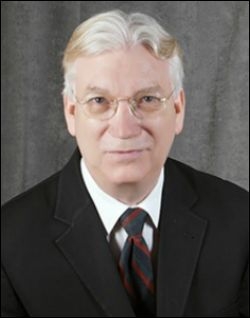
Raymond Stock
To discuss Egypt's prospects under the Abdel Fattah al-Sisi government, we invited back Dr. Raymond Stock ... (See: No Blinders About Egypt Under Muslim Brotherhood ). Stock is a Shillman/Ginsburg Writing Fellow at the Middle East Forum and a former Assistant Professor of Arabic and Middle East Studies at Drew University. He spent twenty years in Egypt and was deported by the Mubarak regime in 2010. He is writing a biography of 1988 Egyptian Nobel laureate in literature Naguib Mahfouz (1911-2006) for Farrar, Straus and Giroux and is a prolific translator of his works.

...Jerry Gordon: Egyptian President al-Sisi started 2015 with two dramatic moves- his New Year's speech at al-Azhar University and Christmas greetings at a Coptic church with Pope Tawadros II present. What were the messages he conveyed to Muslim clerics, Coptic Christians and the world?

Raymond Stock: At al-Azhar, President al-Sisi was saying it is not merely an extremist interpretation of Islam that is threatening the world with global jihad, but ideas that are at the core of the mainstream, orthodox understanding of the religion--and that this would require a "religious revolution" to change.
"[Al-Sisi] was saying that Islam as it is being taught and practiced by its leading religious scholars has given birth to a globally destructive ideology which is now threatening us all."
At the Coptic Cathedral, he urged Egyptians not to define themselves by their religion, be it Christian or Muslim, but by the fact that they are Egyptians--a rejection of Islamism, which defines national identity in purely religious terms.
To the world, he was saying that Islam as it is being taught and practiced by its leading religious scholars has given birth to a globally destructive ideology which is now threatening us all.
Moreover, he wants to launch a movement within Islam to save the religion from itself, that is, before it tears itself apart completely and the rest of the world destroys it in self-defense.
"And he challenged the clerics to take the lead in that effort by openly re-examining their own teachings and source materials for interpreting Islam."
And he challenged the clerics to take the lead in that effort by openly re-examining their own teachings and source materials for interpreting Islam.

...Gordon: Following, al-Sisi's ouster of President Morsi and crackdown on Muslim Brotherhood leaders, what has happened to the movement in Egypt?


Stock: Though deservedly banned as a terrorist group, its top leaders in jail and the rest driven underground or abroad, it is far from dead and remains a threat to the Egyptian state and society. Its refusal to accept the June 30 popular revolution (far larger than the one that overthrew Mubarak), parental bonds to Hamas, financial support from Qatar and wealthy Gulf donors (and possibly Iran), partnership with the Salafis and ideological affinity and outreach to groups like al-Qa'ida and Islamic Jihad have served it well in retaining its base while gaining sympathy--especially internationally.
"[The Egyptian Muslim Brotherhood] is far from dead and remains a threat to the Egyptian state and society."
Though all these factors--plus its horrendous behavior in power--have greatly alienated the majority of Egyptians, they are for the most part also its greatest assets for the future, if they can only survive the current storm. As they have shown in several major periods of repression in the past--the most severe being under Abdel-Nasser--they only need to endure until there is successor to al-Sisi, who may decide to restore the MB to political legitimacy as a means of fighting al-Sisi's remaining political allies. (Anwar al-Sadat, for example, freed the MB activists from prison to combat the surviving members of Abdel-Nasser's coterie.) Such a situation could put them in striking distance of taking power again.

Meanwhile, the MB has global headquarters in Istanbul and London, is very influential in Europe, and has enormously increased its penetration at the federal, state and local levels all over the US. As part of this, it has deeply bonded with the highest levels of the Obama administration, which uncritically backed its creation of an elected, one-party dictatorship under Morsi. Obama evidently seeks to help the MB to return to power in Egypt—as shown, for example, by the State Department's recent hosting of a conference of MB allies at Foggy Bottom, though it may take a while. Al-Sisi probably only has a year or two to turn the economy around before he risks another uprising.

"[The Muslim Brotherhood] has deeply bonded with the highest levels of the Obama administration, which uncritically backed its creation of an elected, one-party dictatorship under Morsi."
The goal of the terrorist insurgency is to discourage foreign investment and stifle the stimulus provided by major government projects such as the new second channel to the Suez Canal to aid the recovery from the last four years of chaos. This, they hope, will pave the way for new popular upheaval which they hope to manipulate if not lead.

Gordon: Has the Islamic State supplanted the Salafist and Muslim Brotherhood movements?

Stock: In a sense, yes, but the situation is actually quite complex. Ideologically, IS—like al-Qa'ida--is an extension of the Salafist movement and the MB (itself established as a Salafi organization in the Salafi library in Ismailiya, Egypt in 1928). IS, because of its uncompromising Islamist purity, harshness, brutality and its dramatic seizure of so much territory in Iraq and Syria, coupled with its incredibly savvy use of social media, has largely eclipsed all of its predecessors in recruitment of fighters to the Middle East. It also outpaced all of them in its creation of lone wolves and sleeper cells in Europe, America and elsewhere.
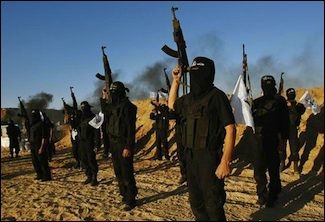
Ansar Bayt al-Maqdis pledged allegiance to the Islamic State (IS) group last year.
That includes Egypt, where the MB-and-AQ aligned Ansar Bayt al-Maqdis (ABM) organization is responsible for most of the attacks in the country over the past two years. ABM, along with its allies controls much of North Sinai and has declared its allegiance to IS.

The MB, as noted, still retains a very strong base, as does the Salafi al-Nour Party which has pragmatically allied itself with Al-Sisi. The appeal of IS may frustrate their ability to draw younger members--yet it is far from clear that IS will do any better in the long run. So have many of the Islamists in Libya, the eastern half of which IS now controls, and may soon run Tripoli as well. The stunning success of IS provides further inspiration to groups like Boko Haram, which has overrun much of northeastern Nigeria and has recently spread into Cameroon, as well as al-Shabaab in Somalia. IS also now has a presence in southern Afghanistan and beyond. Unless it is destroyed militarily in the very near future--which is virtually impossible so long as Obama is President--IS threatens every state with a significant Muslim population, as well as the West, which is its ultimate target.

Gordon: Al-Sisi has propounded a doctrine of stability for Egypt. What is it and has he succeeded since his election?

Stock: I would say that if al-Sisi truly has established such a doctrine for stability, it would consist of the following:
  1. Anti-Islamism—i.e. a more limited role for Shariah (which is nonetheless still enshrined in the new constitution, yet no longer to be interpreted by the clerics at al-Azhar, but by the government, whose authority and much of its outlook is secular, not religious;
  2. Electoral democracy though with somewhat limited civil liberties, to satisfy both the demand for popular sovereignty and for an end to the endless chaos--strikes and demonstrations (and skyrocketing crime) since the fall of Mubarak in 2011, and to limit the public role of the Islamists, who are at war with Egypt; and
  3. An independent foreign policy—one that still seeks to maintain the traditional alliance with the U.S. and the West, but is not afraid to go elsewhere as needed.
"Obama's backing of the Islamists and his cutting of aid for the past two years have driven al-Sisi to radically diversity Egypt's sources of funding and investment from abroad, including for the first time military aid."
Obama's backing of the Islamists and his cutting of aid for the past two years have driven al-Sisi to radically diversity Egypt's sources of funding and investment from abroad, including for the first time military aid.

For more than three decades, Egypt's military assistance came almost exclusively from Washington, though that is now being surpassed by multi-billion dollar arms deals from Moscow and even to an extent from Beijing, funded by al-Sisi's backers in the Gulf.

That puts the Egyptian-American alliance and its principal benefits—the more than thirty-five year peace with Israel, our priority access to the Suez Canal (now being expanded with a second channel but without US investment), and vital cooperation on security issues—seriously at risk.

Gordon: Some analysts have said that in the wake of the Arab Spring the old order of regional autocracies has re-emerged in an alliance against the Muslim Brotherhood. What is your view and especially in the case of Egypt's North African neighborhood?

Stock: That depends on the country:

  • in North Africa, King Mohammed VI is still in power, but the Muslim Brotherhood has won more seats than the other parties in parliament, a situation echoing that in Jordan, though it is less precarious at present. 
  • Algeria, still recovering from the savage Islamist bloodbath after the Army's annulment of elections in January 1992, was least affected of all the states in the region by the Arab Spring. (Perhaps the only major result there was the lifting of the State of Emergency that had prevailed for nearly two decades, in February 2011.) 
  • Tunisia, where the Arab Spring began in December 2010, threw out its MB-affiliate controlled government in a popular movement backed by the army—in a situation that rather echoed the one in Egypt, and late last year elected a new secularist plurality in parliament and a new secularist president, Béji Caїd Essebsi.
  • In Libya, the feeble central government that we helped install by foolishly removing the vicious, eccentric but cooperative Col. Mu'ammar al-Qaddafi has predictably collapsed. Yet a new secularist-dominated government was elected last June 25 and a pro-secularist remnant of the Qaddafi era, General Khalifa Haftar, for the past year has been at war with the Islamist militias that have been the real powers since 2011. Haftar also wants to destroy the Libyan iteration of the Muslim Brotherhood, root and branch, especially after it launched an armed uprising in eastern Libya following Morsi's ouster in Egypt in 2013. As a result of this chaos, generated by our own needless—or at least, badly botched--intervention in the Arab Spring, the U.S. now has no effective presence in Libya. The security vacuum prompted Egypt and the United Arab Emirates to cooperate in launching air strikes near Tripoli last summer in support of Haftar's forces. IS and other Islamist organizations are now infiltrating weapons and fighters into Egypt from Libya, threatening the country's—and the region's—stability.


In the Eastern Arab world, Egypt's principal allies now are Saudi Arabia and the UAE, who together immediately pledged 12 billion dollars in aid after Morsi's removal, and have given billions more since. All of it and more is desperately needed to compensate for the depletion of Egypt's hard currency reserves, loss of foreign investment and near-destruction of the once lucrative tourist industry that have all continued since the January 25th Revolution against Hosni Mubarak.

Both the Saudis and the Emiratis oppose the MB and Hamas, who—along with Egypt under Morsi—are clients of their Gulf rival, Qatar. America's annual, mainly military package of $1.5 billion seems trifling in comparison (unless viewed cumulatively since it began in 1979). Still, it will be difficult to switch to mainly Russian or Chinese systems--much as the latter may be based on hacked American designs--after so many years of absorbing Yankee equipment and training.

Gordon: What is the emerging change in Egypt's relations with Israel, both geo-political and economic?

Stock: Unlike Morsi and the MB, who worked covertly with the terrorists in Sinai, al-Sisi wholeheartedly supports the peace with Israel. He has greatly increased security cooperation with the Jewish state—which had been endangered in the 2011-12 transition and during the Morsi era—to levels exceeding those under Mubarak. Again, even more than Mubarak, who loathed them too, al-Sisi sees the MB, Hamas and their Islamist allies as threats to Egypt as well as Israel. Likewise, he sees Iran—with whom Morsi sought a rapprochement—as Egypt's greatest strategic adversary in the region.
"Unlike Morsi and the MB, who worked covertly with the terrorists in Sinai, al-Sisi wholeheartedly supports the peace with Israel."
As a result, Egypt is now in an informal alliance with Israel, the United Arab Emirates and Bahrain to confront Iran. That alliance is compromised, however, by recent moves from Egypt's Gulf partners to mend fences with Iran as a result of their feeling exposed by Washington's alarming pivot toward Tehran at the expense of its traditional Sunni clients.

Meanwhile, though overall Israel-Egypt trade remains minimal (as it had through the decades of cold peace under Mubarak and afterward), energy-strapped Egypt may soon be importing natural gas from Israel's newly-developed Tamar Reservoir in the Mediterranean. Given that Israel used to import natural gas from Egypt via a pipeline shared with Jordan (repeatedly sabotaged physically as well as assailed legally in Egypt since the fall of Mubarak), that is a remarkable turnaround indeed.

...Gordon: Why has the US Administration maintained an arm's length relationship with al-Sisi subsequent to the ouster of Morsi?

"Obama's leftist, rather Edward-Saidian worldview ... sees indigenous anti-Western forces such as the Islamists to be the benignly natural and legitimate consequence of American and European policies during the colonial era and the Cold War."

Stock: It is no doubt due to Obama's leftist, rather Edward-Saidian worldview, which sees indigenous anti-Western forces such as the Islamists to be the benignly natural and legitimate consequence of American and European policies during the colonial era and the Cold War—for which he has apologized repeatedly. He also has a positive, nostalgic view of Islam, given that he was born of a Muslim father and having apparently been raised as one by his step-father during his early childhood in Indonesia, and seems to project this image onto radical groups like the MB who cleverly pose as moderates. He is thus surrounded by numerous pro-Islamist advisers, as well as those who simply take a naïve view of groups like the MB, Hamas and Hizbollah--and even the Taliban (not a new position, but one now getting attention in the news).

It also means that [Obama] denies the common Islamist ideology of all those groups as well as AQ and IS, or even any connection of their beliefs to Islam. This, despite their being made up entirely of Muslims, that they base their ideology and tactics on the Qur'an, Hadith and other key Islamic texts, and that they have a very wide appeal in the global Islamic community. This is even more bizarre if you compare his statements and those of his aides about this question to those of al-Sisi—a Muslim leader of a majority Muslim country—at the seat of Sunni Islam's highest authority, al-Azhar, on New Year's Day. One of them, Obama, is willfully blind; the other, al-Sisi, with devastating clarity, identifies the problem as coming from within the very heart of Islam.

On a personal level, Obama does not take kindly to those who cross him. Just look at his relationship with Congress, and with Benjamin Netanyahu, while ignoring his own transgressions against those he thinks are transgressing against him. He regarded al-Sisi's patriotic overthrow of Morsi--whom he had bolstered with more and more aid even as the MB leader became more and dictatorial--at the demand of more than twice as many Egyptians as those who voted for Morsi, as a personal affront as well as ideological heresy. He has since punished al-Sisi and the Egyptian people who rejected his chosen savior of their destiny accordingly. That may have softened a bit recently, due to the need to find Arab allies to fight IS, but that is not a serious effort: the default position is against al-Sisi and for the MB.

Gordon: Given your Egyptian sojourn does al-Sisi have both the domestic and international support to implement his agenda?

Stock: Domestic, yes—all but a quarter to a third of the country wants him to succeed. But internationally is another story.

Al-Sisi's greatest enemy is not the MB, or even IS, but the president of the United States. When the State Department invited key figures from the pro-MB alliance of groups to a major conference in Washington this week, he was signaling his desire (and only Obama sets our foreign policy) to overthrow al-Sisi—just as his invitation to the leaders from the banned MB to sit in the front row of his Cairo speech in 2009 signaled that he wanted to remove Mubarak. So U.S.-dependent international institutions and allies may not be too supportive of al-Sisi.

The only possible silver lining for Egypt is, ironically (given our historic alliance), really a great problem for our country, if one values its role of global leadership since World War II.

That is, Obama has done so much to destroy America's standing with the rest of the world that even our closest allies no longer fear to stray, and may yet not follow his wishes regarding al-Sisi. 

Tragically, on many issues, that may be better for us all until Obama leaves office. For the heading [Obama] has set leads directly to hell, a destination that many countries, thanks to in large part to his policies, have already seen (and Syria and Libya have already become)--good intentions (by his lights) notwithstanding...

08 February 2015

Bob Carr's meddling is harming Labor

THE [Arab-Israel] conflict... is now potentially a powder keg for the Australian Labor Party.

Arab advocate, Bob Carr

The claims by ... Bob Carr in an article for The Guardian newspaper on January 14 illustrate a looming debate at the forthcoming ALP national conference in July. Carr said he “winced” at Australia’s vote at the UN Security Council on the recognition of a Palestinian state in Dec­ember, alleging the Coalition meekly delivered “what the pro-Israel lobby in Australia wanted”, ignored the national interest and delayed the achievement of a two-state solution.

So what are the facts and the ­issues? Late last year, after many iterations of an earlier draft, Jordan submitted a resolution to the UN Security Council on the Middle East. The resolution was voted on, on December 29, but failed to muster the minimum nine yes votes required (a two-thirds affirmative vote) from the council for adoption and then for a vote before the full assembly of the UN. The motion received eight affirmative votes, from Jordan, China, France, Russia, Luxembourg, Chad, Chile and Argentina; two no votes, from the US and Australia; and five abstentions, from Britain, Lithuania, Nigeria, South Korea and Rwanda.

Samantha Power, the US ambassador to the UN, said the resolution was “deeply imbalanced and contains many elements that are not conducive to negotiations between the parties, including unconstructive deadlines that take no account for Israeli’s legitimate security concerns”.

There the matter rested, without much Australian interest, until Carr, once more, entered the debate demanding recognition of “Palestine”, as proposed by Jordan and others.

The draft UN resolution did not deserve support for many reasons. 
  • First, although the resolution is 80 per cent OK, the remaining 20 per cent is a minefield. 
  • Second, although the draft preaches peace, in parts the resolution is vague and unbalanced, sometimes dangerously so. With mere declaratory resolutions, there is the temptation to sweep the deficiencies aside and let it go through. But the better view, especially when every word is loaded with resolutions involving the Middle East, is not blithely to ­ignore the hardest facts.
  • Third, there is already a good deal of constructive and forceful diplomacy going on in coaxing, cajoling and pleading with Israel and the Palestinians to reach a fair conclusion. Foremost in these efforts are those by US Secretary of State John Kerry and the Quartet (the UN, the US, the European Union and Russia) led by Tony Blair. The proposed resolution undermines their efforts.
  • Fourth ...The two parties who need to work out a solution directly are the Israelis and the Palestinians.
  • Fifth, it is irresponsible to recognise a country with no agreed boundaries. If recognition ignores what ought to be and would be defined borders, we are delving into the realm of metaphysics rather than practical politics. The world might as well recognise Utopia.
  • Sixth, a country without clear definition of its borders is a recipe for border skirmishes in defining clear borders.
  • Seventh, Israel has legitimate fears about the formation of a ­second Hamastan in the heart of ­Israel — this is front and centre of Israel’s security concerns.
  • Eighth, the security concerns of Israel are given short shrift. Noticeably, the UN draft resolution was weaker than what Carr advocated at the NSW ALP conference last July. One of the key planks of Carr’s resolution then was that “NSW Labor welcomes the decision of the Palestinian Authority to commit to a demilitarised Palestine with the presence of international peacekeepers, including US forces”. Either this is an essential point or a matter of rhetoric. In the UN resolution there was no reference to a demilitarised Palestine. What the resolution refers to is the need for “security arrangements, including through a third-party presence that guarantee and respect the sovereignty of a state of Palestine, including through a full and phased withdrawal of the Israeli occupying forces”, which is proposed to occur no later than the end of 2017. This is an incredibly weak statement. Yet, in his January article, Carr says of the proposed UN wording: “It thus captured the recent Palestinian concession that there should be Western peacekeepers within the territory of their putative state. And Australia voted that down.” But that is not what the words in the draft resolution actually say.
  • Ninth, the status of Palestinian refugees and their descendants is confusingly mentioned in the draft Jordanian resolution. In 1999, then Israeli prime minister Ehud Barak offered the resettlement of up to 50,000 in Israel. Such numbers have been off the table ever since. Barak’s proposal, part of a wider package, was rejected by Yasser Arafat when he spurned the Clinton peace proposals. Perhaps economic compensation, long proposed by the Americans, in rebuilding and developing Palestinian society, is what is needed. But the reference, in the draft UN resolution, to resolution 194 (iii), as stipulated in the Arab Peace Initiative, is unhelpful. UN resolution 194 was adopted in 1948 and proposed the return of Palestinian refugees to their homes. The Arab peace initiative proposes all refugees and their descendants have the right of settlement in ­Israel. This is an impractical idea.
  • Tenth, the proposed UN resolution recklessly refers to the International Court of Justice’s decision of July 9, 2004, on the legal consequences of the construction of a security barrier in the occupied Palestinian territory. On one reading, this reference is not saying much. On another, this is suggesting the wall be pulled down. Construction of the barrier began in 2002, following the Palestinian intifada, and its purpose was to stop the wave of suicide bombings that took hundreds of lives in Israel. The Palestinian Authority sought a ruling from the International Court of Justice on the fence. Israel refused to present evidence directly, arguing the court had no jurisdiction, and presented only an advisory opinion on the jurisdiction issue. The majority of the court in an advisory opinion, however, ruled for the Palestinians in a complicated assessment, with dissent from several judges. Given the lives saved, no Israeli government would dismantle this structure. Certainly, with border adjustments, parts will need to be rebuilt in accordance with new boundaries. Sadly, however, until confidence is built up, there will continue to be a wall.

Speaking of which, point six of the draft UN resolution calls on both parties to build trust and engage in confidence-building measures. In that spirit, how about the Palestinian Authority banning television shows that night and day incite the murder of Jews? This is an unrelenting theme, featured in children’s shows and cartoons, and popular dramas, on Palestinian television. There is a fear the PA is so weak it is unable to control elements interested in continuing the armed struggle.

After all, when Israel’s Gaza withdrawal occurred, following agreement with Mahmoud Abbas, Hamas was soon after ruling the roost. Unrelenting rocket attacks on Israel launched from Gaza have been a constant ever since. Abbas seems to be an honourable man but a weak one and, at nearly 80, with few years left for the political stage. It is more than a decade since he last faced direct election. Who knows who will come next.

The slaughter last November of rabbis praying in a synagogue in Jerusalem (historic Jewish Jerusalem) and the celebratory response in the Arab world make many Israelis wonder what lies ahead. (Note that the Jordanian parliament passed a motion hailing these murderers as martyrs. There were celebrations, firecrackers going off and dancing in the street in Ramallah.)

The arguments against the draft UN resolution united the Israeli opposition (the Israel Labor Party, led by Isaac Herzog, in coalition with Hatnuah, led by Tzipi Livni), and Kerry, the US Secretary of State, among other significant players, in urging it be voted down.

Israeli Labor has been petitioning foreign governments against unilateral declaration. ­Labor Party secretary Hilik Bar wrote an open letter to Britain about this. He cited unilateralism as making things worse in terms of Israel’s desire to move back to serious peace talks. A renewed opportunity with the latter is with the election of a new government in Israel. It appears Labor and its ­coalition allies are performing strongly.

The recent stance on the Middle East adopted by Carr, however, departs from Australia’s reasonable position of the achievement of national objectives and high ­ideals, through practical means. Unilateral adventurism and inconsistency are hardly the hallmarks of creative realism.

The ALP needs to be cautious about sweeping generalisations, wary of lazy wording in conference resolutions and particularly determined to get the language right with anything that might be supported on the international stage.

...Even if a particular resolution is four-fifths OK, all the words matter and cannot be regarded lightly. A draft UN resolution that sets unilateral deadlines, avoids the hard security issues and is laden with provocative references to Israel is not the way ahead.

Australia’s best hopes are served by working in tandem with the US in pressing for a workable solution. Endorsement of one-sided, loosely worded resolutions is not a responsible position for our country. Labor ought to be better than that. I believe it will be, come the July ALP national conference. But, in view of Carr’s persistent advocacy, there’s a long road ahead.


*Michael Easson is a former NSW Labor Council secretary and NSW Labor vice-president.

11 January 2015

Australian Muslims are statistically more likely to engage in jihad than to enlist in the Australian Defence Forces.

From the SMH, 11 Jan 2015, by Paul Sheehan:
<i>Illustration: michaelmucci.com</i>
Illustration: michaelmucci.com

When French president Francoise Hollande addressed the nation on Friday in the wake of terrorist attacks that left 20 dead, he uttered the predictable mantra:
"These fanatics have nothing to do with the Muslim religion".
His comment is understandable given that France has more than five million Muslims, a stagnant economy, 24 per cent youth unemployment and endemic social alienation among young Muslims.

His comment is also nonsense. A de facto world war is under way and it has everything to do with Islam. It is not thousands of lone wolfs. It is not un-Islamic conduct. It involves thousands of Muslims acting on what they believe is their religious duty to subjugate non-believers, as outlined in the Koran.

And the problem is growing, not contracting. There was once a tradition among young Australians to travel overland from Singapore to London. That route has become a hell-hole:

Pakistan is dangerous. Afghanistan is a no-go area. Iran is an oppressive theocracy. Iraq is disintegrating. Syria is a disaster area. Lebanon is dangerous. In Turkey, for the first time, Australians travelling to Gallipoli will be going under a security alert.

All these Muslim countries used to be safe for transit. The intimidation being practised in the name of Islam by a small minority is a by-product of something much larger – the state-mandated conservatism that is systemic in the majority of Muslim societies. Most of them are dictatorships, monarchies, theocracies or failed states.

An investigation by Kings College London and the BBC World Service found that in a single month, November 2014, 5042 people were killed by jihadists in 664 separate attacks across 14 countries. That is one death every eight minutes.

It is ongoing. On Thursday, the Islamist group Boko Haram (which translates as "Western education is forbidden") is believed to have murdered  up to 2000 people in Nigeria. These crimes, far greater in scale than those in Paris, received only a fraction of the attention.

In the 35 years since the Islamic revolution in Iran in 1979, at least a million people have been killed in tens of thousands of jihad attacks, religious civil wars or wars between predominantly Muslim countries.   

In France, a form of dissimilation (to borrow a term from phonetics) is taking place. About 40 per cent of young Muslims are unemployed and thousands have embraced radical Islam as a form of social retaliation.

Surveys have found that between 16 and 21 per cent of respondents in France hold positive views of Islamic State. Given that France has more than five million Muslims, the social catchment of sympathy for jihad is about one million people.

This explains why France has 751 special security zones, an endless sequence of violent incidents involving young Muslim men, anti-Semitic incidents have become routine and Muslims represent 60 per cent of the prison population. Two of the three jihad killers in Paris had served time in prison.

France and Australia are linked by the past week's events. Both countries have been drawn into an asymmetrical global jihad, fed by notoriety and thus self-sustaining.

In Australia, the pressures are much less severe in the Muslim diaspora but there are self-evident problems.

Here is a statistic to ponder: 
Australian Muslims are statistically more likely to engage in jihad than to enlist in the Australian Defence Forces.

As at June 30, 2014, there were 57,036 permanent members in the ADF, plus 24,028 in the reserves. When I asked Defence Media how many ADF personnel were Muslim, I received this response:

"As at 26 October, 2014, 100 ADF members have declared they are of Islamic faith … The reporting of religious faith is voluntary and, as such, the data provided may not be a fully accurate representation."

With about 500,000 Muslims in Australia, representing 2.1 per cent of the population, there would be about 1200 Muslims in the ADF if they served on a per capita basis. Instead, the number is miniscule, about 0.2 per cent.

In contrast, 20 Australian Muslims have been killed in fighting in the Syrian civil war, an estimated 60 are still in the combat zone, another 20 have returned from Syria, and an estimated 100 more have provided support for jihad. These figures are from the federal government.

Another 20 Muslims are serving prison terms in Australia for serious terrorism offences or are facing terrorism charges. Two more Muslims, Man Haron Monis and Abdul Numan Haider, were killed during attacks in Australia in which they both invoked Islamic State.

Obviously, if 220 Australian Muslims are known to have engaged in jihad or supported jihad, it follows that 500,000 Muslims, or 99.95 per cent, have not.

Equally obvious, the diverse Muslim diaspora cannot be treated as a dangerous monolith, given that Muslims are the primary victims of oppression by Muslims and the overwhelming majority of Muslims either prefer the peaceful precepts of the Koran or are not highly religious.

But the calculus of terrorism relies on the leveraging of small numbers. It only took three jihadists to occupy 90,000 French police and military personnel, at enormous cost to the state, with enormous global publicity. That will have been duly noted by jihadists.

Australia's security agency has thus become extremely busy. Last financial year, ASIO conducted 159,000 security assessments. This helps explain why the Lindt Café killer was taken off the watch list.

Because of the leveraging of small numbers, the deaths of 22 Australian Muslims in the cause of jihad represents serious social capital. In per-capita terms, it the equivalent of more than 1000 Australian soldiers being killed in Afghanistan. This dwarfs the death toll of 43 Australian military personnel killed in the Iraq and Afghanistan wars over the past decade, regarded as a heavy social cost.

In these terms, 22 is a large number and 220 is a very large number.

Goodbye France.

An opinion by Dr Ron Weiser AM:

Je Suis Charlie, Je Suis Ahmed, Je Suis ?????

I was waiting for another Je Suis to spontaneously erupt from the good people of France.

But it did not come, maybe tomorrow, maybe not...........not the French word for Jewish or the names of even one of the innocent people going about their erev Shabbat shopping in a kosher store in France.

Je Suis?????

And no, the real problem is not the Moslem population of France, nor even the Jihadist element of that population.

Blaming them allows the French an excuse.

The real problem is France.

Even before this latest atrocity French Jews were making aliyah in record numbers.

Thousands and thousands – 8,000, 9,000 in 2014 alone.

For the first time in the history of the modern state of Israel, more Jews are coming on aliyah by choice from a democratic country than from your typical country of distress.

Is this because French Jewry is more Zionistic than say the Jews of Australia?

Is this because the aliyah shaliach in France is so effective?

It is because something is so broken within French society – the non Moslem 90% of the population - and within the leadership of France, that Jews are fleeing for their lives – literally.

A France that is rotten to the core.

A hypocritical country that thinks that mouthing slogans of liberty and equality make it so.

A country that snobbishly looks down on the State of Israel and waves its wand of moral equivalence over her. Where an Israeli Arab is safer walking any street in Israel dressed in any religious garments he or she chooses, than a Jew in France walking around in a kippa.

A France that only a few days ago voted in the UN Security Council for a Palestinian State without any safeguards or guarantees at all that a Jewish State alongside it would be part of the deal.

A France whose actions do not immunise it from the Jihadists in any case.

Thank G-d for Australia.

And what a delicious and fitting irony.

That of all people, of all people, Bob Carr must be kicking himself for pushing so heavily for Australia to have a seat on the UN Security Council and then for that seat to be used byAustralia to demonstrate the moral clarity Prime Minister Abbott and Foreign Minister Bishop did with that magnificent vote, the final vote of Australia’s term as a Security Council member.

I wrote in an earlier piece of my disbelief when during a debate I heard in Israel last year on the situation of French Jewry which included one of their leading representatives, he stated that there was no anti-Semitism in France.

I was equally shocked two years earlier when another leader of French Jewry publically blamed Israel for causing French Jewry’s problems (the problems they claim they do not have), more or less along the same lines as a so called leading light of British Jewry.

There are many lessons to be learnt.

Not the least of which is to recognise a problem when it exists.

And to not excuse an act of fundamentalist terrorism as that of a crazy criminal.

U.S. President Barack Obama said he wants the people of France to know that the United States "stands with you today, stands with you tomorrow" after this week's terror. He told a crowd in Tennessee that "we stand for freedom and hope and dignity of all human beings, (and) that's what Paris stands for."

He is wrong – that is not what Paris stands for at all.

The kidnapping and torture of Ilan Halimi in 2006; the terrorist murders of Jews in Toulouse in 2012; and the attack in May at the Jewish Museum of Belgium, in which four people were murdered and for which a man with French and Algerian citizenship was arrested tested Paris.

What did Paris stand for then?

Platitudes.

A few nice words.

Does French Jewry feel safer today?

French President Hollande summed it all up so so terribly wrong.

He called the attack on the Hyper Cacher supermarket an act of anti-Semitism.

Of course it was, but in French terms that is not so horrible after all and has happened before.

Until the French leadership and the French people regard the attack on the kosher deli just as they regard the attack onCharlie Hebdo AND use the same terms – an attack on French values, on the French way of life and on France itself – we should call them out on their moral failings.

And until then, goodbye France.


05 January 2015

A Rogues Gallery of Australian Politicians

The following Australian politicians signed the anti-Israel declaration to "call on all Australian politicians to condemn the ongoing Israeli military bombardment and invasion of Gaza. ... to support an immediate cessation of hostilities and a ceasefire deal which includes an end to Israel's occupation of the Palestinian territories and to the blockade of Gaza [and] ...to also support the United Nations Human Rights Council's decision to launch an independent inquiry into purported violations of international humanitarian and human rights laws in the Occupied Palestinian Territory, including East Jerusalem..."

The organisers for this piece of terrorism-supporting propaganda are Melissa Parke and  Lee Rhiannon
    1. Maria Vamvakinou MP, Labor (VIC)
    2. Melissa Parke MP, Labor (WA)
    3. Laurie Ferguson MP, Labor (NSW)
    4. Alan Griffin MP, Labor (VIC)
    5. Sharon Claydon MP, Labor (NSW)
    6. Adam Bandt MP, Greens (VIC)
    7. Barbara Perry MP, Labor (NSW)
    8. Andrew Giles MP, Labor (VIC)
    9. Paul Lynch MP, Labor (NSW)
    10. Jamie Parker MP, Greens (NSW)
    11. Lynda Voltz MLC, Labor  (NSW)
    12. Shaoquett Moselmane MLC, Labor (NSW)
    13. David Shoebridge MLC, Greens (NSW)
    14. Dr Mehreen Faruqi MLC, Greens (NSW)
    15. Dr John Kaye MLC, Greens (NSW)
    16. Jeremy Buckingham MLC, Greens (NSW)
    17. Jan Barham MLC, Greens (NSW)
    18. Senator Claire Moore, Labor (QLD)
    19. Senator Nick Xenophon, Independent (SA)
    20. Senator Christine Milne, Greens (TAS)
    21. Senator Lee Rhiannon, Greens (NSW)
    22. Senator Sarah Hanson-Young, Greens (SA)
    23. Senator Larissa Waters, Greens (QLD)
    24. Senator Janet Rice, Greens (VIC)
    25. Senator Richard Di Natale, Greens (VIC)
    26. Senator Penny Wright, Greens (SA)
    27. Senator Rachel Siewert, Greens (WA)
    28. Senator Scott Ludlam, Greens (WA)
    29. Senator Peter Whish-Wilson, Greens (TAS)
    30. Senator Sue Lines, Labor (WA)
    31. Tammy Franks MLC, Greens (SA)
    32. Graham Perrett MP, Labor (QLD
    33. Senator Anne Urquhart, Labor (NSW)
    34. Terri Butler MP, Labor (QLD)
    35. Julie Owens MP, Labor (NSW)
    36. Lisa Chesters MP, Labor (VIC)
    37. Senator Gavin Marshall, Labor (VIC)
    38. Senator Anne McEwen , Labor (SA)
    39. Senator Carol Brown, Labor (TAS)
    40. Senator Doug Cameron, Labor (NSW)
    41. Cassy O’Connor MLA, Greens (TAS)
    42. Senator Jan McLucas, Labor (QLD)
    43. Lynn MacLaren MLC, Greens (WA)
    44. Jill Hall MP, Labor (NSW)
    45. Jackie Trad MP, Labor (QLD)
    46. Malcolm Fraser, former Liberal Prime Minister
    47. Shane Rattenbury MLA, Greens (ACT)
    48. Yvette Berry MLA, Labor (ACT)
    49. Bronwyn Halfpenny MP, Labor (VIC)
    50. Tony Piccolo MP, Labor (SA)
    51. Andrew Wilkie MP, Independent (TAS)
    52. Senator Lisa Singh, Labor (TAS)
    53. Khalil Eideh MP, Labor (VIC)
    54. Lee Tarlamis MP, Labor (VIC)
    55. Johan Scheffer MP, Labor (VIC)
    56. Katrine Hildyard MP, Labor (SA)
    57. Janine Freeman MLA, Labor (WA)
    58. Amanda Fazio MLC, Labor (NSW)
    59. Mary Porter MLA, Labor (ACT)
    60. Ian Hunter MLC, Labor (SA)
    61. Stephanie Key MP, Labor (SA)
    62. Maree Edwards MP, Labor (VIC)
    63. Adam Searle MLC, Labor (NSW)
    64. Sylvia Hale, former Greens MLC (NSW)
    65. John Gazzola MLC, Labor (SA)
    66. Katy Gallagher MLA, Labor (ACT)
    67. Ian Cohen, former Greens MLC  (NSW)
    68. Kelvin Thomson MP, Labor (VIC)
    69. Anna Burke MP, Labor (VIC)
    70. Senator Kate Lundy, Labor (ACT)
    71. Carmel Tebbutt MP, Labor (NSW)
    72. Sharon Knight MP, Labor (VIC)
    73. Jo Vallentine, former Senator for Nuclear Disarmament Party and Greens (WA)
    74. Marg Lewis MLC, Labor (VIC)
    75. Mark Parnell MLC, Greens (SA)
    76. Dee Margetts, former Greens Senator (WA)
    77. Simone McGurk MLA, Labor (WA)
    78. Jo-Ann Miller MP,  Labor (QLD)
    79. Senator Sam Dastyari, Labor (NSW)
    80. Kerry Nettle, former Greens Senator (NSW) 

02 January 2015

There is no war between Israel and a nonexistent nation

From The Australian, 3 Jan 2014, by Gerard Henderson:

IN mid-December I travelled from Jerusalem to Ramallah for meetings inside the territory presided over by the Palestinian Authority. I was accompanied by an able young diplomat who heads the Australian Representative Office in Ramallah.
 
All was quiet on the border between the area of the West Bank presided over by Israel and that governed by the PA. Despite some tensions between the administrations in Jerusalem and Ramallah, the PA’s President Mahmoud Abbas had decided to continue the security agreement that exists between the PA and Israel. This protects both entities from terrorist attacks from Islamists including those who express allegiance to the so-called Islamic State.

So it came as some surprise when ABC News Breakfast presenter Beverley O’Connor introduced a segment on the Middle East on Thursday with a reference to what she termed the “Israeli-Palestinian war”. O’Connor later referred to the “very costly and brutal conflict between Israel and Palestine that seems to have no end”.

Contrary to O’Connor’s editorialising, there is no war between Israel and Palestine. Nor has such an entity as Palestine ever existed. Jordan was in control of the area between Israel and the Jordan River between the creation of the State of Israel in 1948 and the 1967 war, which saw Israel occupy the area. In almost two decades Jordan did not establish a state of Palestine.

... no elected Israeli leader, on the right or the left, will agree to the creation of a Palestinian state without a watertight security agreement.

In Australia’s last vote in its two-year position on the UN Security Council, the Abbott government opposed a resolution proposed by Jordan, which set a three-year deadline for Israel to withdraw to the pre-1967 “green line”. The Jordanian resolution also provided for the creation of a Palestinian state.

In this instance, Australia’s position was identical to that taken by Barack Obama’s administration. The Jordanian resolution failed to take into account that a peace process in the region could not be established by UN fiat. It can be agreed to only among the existing parties.

A glance at the topography of the region suggests that Israel may not be able to defend itself if a return to pre-1967 borders were agreed to without concessions. At the end of 1966, Israel shared a border with a state administered by Jordan that prevailed over East Jerusalem including the Old City. It is difficult to imagine that any democratically elected government in Israel would agree to an antebellum situation that could see Hamas on Israel’s doorstep.

Australia’s decision to vote in agreement with the US in the Security Council on the Jordanian resolution is not an example of Tony Abbott slavishly following Obama. Not at all. Australia has been a strong supporter of Israel’s right to exist within secure borders since the establishment of the State of Israel in 1948. Also, the policy has been essentially bipartisan.

Australia’s support for Israel started when Labor’s Ben Chifley was prime minister. It continued after December 1949 under the Coalition prime ministers Robert Menzies, Harold Holt, John Gorton and William McMahon. Gough Whitlam was not as friendly to Israel as his predecessors, but his government lasted only three years. Malcolm Fraser is one of Israel’s most high-profile critics. But he did not manifest such a position during his nearly eight years as prime minister. Labor prime ministers Bob Hawke and Paul Keating were supportive of Israel, as was John Howard. Kevin Rudd essentially continued this position, as did Julia Gillard.

Viewed in this light, the position taken by the Prime Minister and his Foreign Minister reflects established policy. Moreover, it makes good sense.

It is fashionable among the left intelligentsia in the West to blame Israel for all the problems in the Middle East. However, the appalling civil war in Syria, which has seen about 200,000 Muslims killed by other Muslims, has nothing to do with Israel. Currently, authorities in Jerusalem want to see reconstruction in Gaza following Israel’s recent war with Hamas aimed at destroying missile sites and attack tunnels on the Israel-Gaza border. Neither Egypt nor the PA is supportive of this proposal, due to the hostility of the governments in Cairo and Ramallah to Hamas.

It is likely that the tension in the Middle East, as it affects Israel, will continue for some time. A long-term settlement seems a long way off. But this does not suggest a war between Israel and the Palestinians as depicted by O’Connor.

About 20 per cent of Israel’s population is made up of Muslims and Christians. Both groups enjoy full democratic rights. What’s more, as Arab-Israeli citizen Khaled Abu Toameh pointed out in The Australian yesterday, there is a lack of democracy in the PA areas on the West Bank — particularly with reference to female critics of Abbas.

While in Israel, I visited the Ziv hospital close to the Lebanese-Syrian borders, where Jews, Muslims, Christians, Druze and other minorities work together. Here, Melbourne-born doctor Michael Harari looks after victims of the Syrian civil war who have been brought to the hospital by the Israel Defence Force. There were adult male and child victims. According to Harari, no one asks details about the patients. They receive the best attention possible. At the Ziv hospital, there is no war between Israelis and Palestinians or, indeed, Syrians. It’s a symbol of hope in a troubled region.

30 December 2014

Federal grant for jihadist recruit

From: The Australian, December 31, 2014, by: MARK SCHLIEBS and EAN HIGGINS:


SA Pics
Samir Atwani at Canterbury Boys High in Sydney.

A TOP Sydney school student was praised by Arthur Sinodinos and given $2000 by the federal government shortly before flying out of Australia to join Islamic State’s propaganda unit in Syria.

It is unclear whether Samir Atwani, who graduated from Sydney’s Canterbury Boys High last year after receiving a university admissions score of 96.25, used any of the government prize money to travel to Syria, where he became a video editor for the proscribed terrorist group.

Last week, The Australian revealed the man, now identified as Mr Atwani, had been studying electrical engineering at university but abandoned the degree when he went to Syria sometime in the past six months. He is now based in Deir Ezzor province. Mr Atwani was a high-achieving student at Canterbury Boys High, which former prime minister John Howard attended as a boy.

...One of the teenager’s closest friends said yesterday Mr Atwani, along with his online profiles, vanished in August, despite the teenager doing well at university, where he had started an engineering degree.

Mr Atwani is understood to have been born in Australia into a family descended from the [Arab] refugee community in Lebanon who fled Israel after the creation of the Jewish state.

Mr Atwani’s friend said the budding video editor had gone to Lebanon for some weeks with his father about 18 months ago, where they visited Palestinian relatives. He said Mr Atwani had ­occasionally mentioned Islamic State videos and praised them — not for their content, but for their high production quality.

...This month, Mr Atwani told The Australian he had volunteered to be in the media unit after Islamic State sought volunteers with experience in video production, and described watching an alleged “spy” being beheaded as “satisfying”....